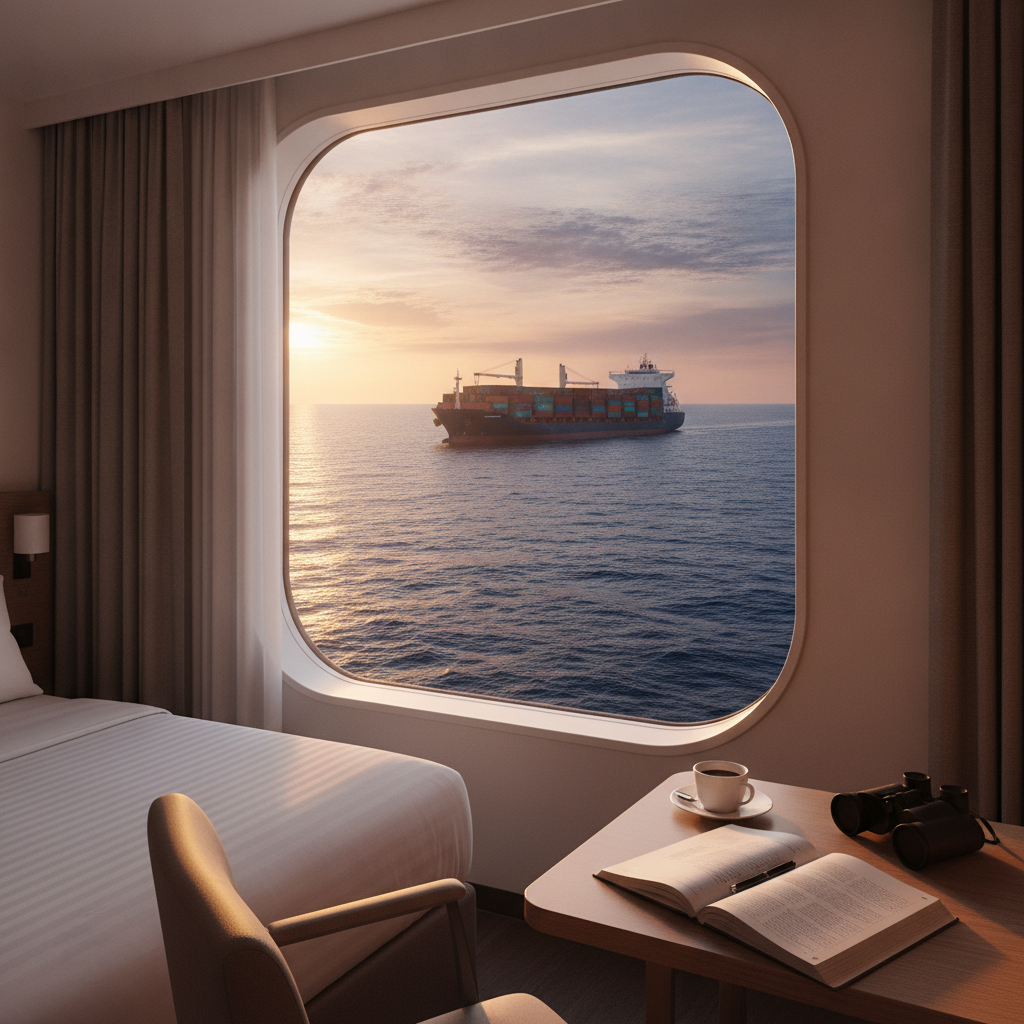
Somewhere between the idea of a transatlantic flight and the romance of a classic ocean liner, there's a third option that most travelers never consider — booking a passenger cabin aboard a working cargo ship. It's slower, quieter, and genuinely unlike anything else on the water. For those who want to cross the Atlantic without stepping foot on a plane, freighter travel offers a practical and surprisingly comfortable way to get from one continent to another, on a vessel that's actually going there to do a job.
Understand What Freighter Travel Actually Involves
Cargo ships are not cruise ships. They carry containers, vehicles, and industrial goods, and passengers are an afterthought — in the best possible way. Most vessels that accept passengers carry between two and twelve travelers at a time, which means the experience is intimate and unhurried. Crossings from European ports like Hamburg or Le Havre to the eastern seaboard of the United States typically take between ten and sixteen days. Meals are usually taken with the officers, and the ship operates on its schedule, not yours.
Book Through a Specialist Agency First
Freighter travel isn't bookable through standard travel platforms. The most reliable way to secure a cabin is through a specialist agency, and two of the best-known are Freighter World Cruises, based in California, and The Cruise People, operating out of the UK. These agencies maintain up-to-date schedules, handle the paperwork, and can advise on which shipping lines — such as CMA CGM or Hapag-Lloyd — accept passengers on Atlantic routes. Trying to contact shipping companies directly is possible, but agencies save significant time and prevent costly misunderstandings about availability.
Get a Medical Clearance Before You Commit
Almost every shipping company requires passengers to submit a health declaration or obtain a doctor's sign-off before boarding. This isn't bureaucratic fussiness — it's practical. The ship is far from any hospital, and the onboard medical facilities are basic at best. Most lines set an upper age limit of around 80, and anyone with a serious cardiac condition or other complex health needs will likely be declined. Schedule a routine check-up, get the required documentation from your GP, and submit everything well in advance of the sailing date.
Pack for Two Weeks of Purposeful Simplicity
Cabin sizes vary, but storage space is rarely generous. The good news is that the days at sea create a natural rhythm that doesn't demand much. Bring layers, because Atlantic weather is unpredictable regardless of the season. A good selection of books, a reliable e-reader, a journal, and offline entertainment on a tablet or laptop will fill the long hours on deck comfortably. Some vessels have a small library or a lounge with a television, but the experience is fundamentally one of disconnection — and most passengers come to appreciate that after the first few days.
Prepare for an Unstructured Schedule
There are no shore excursions, no poolside activities, and no entertainment directors aboard a working freighter. The days are yours entirely. Most passengers settle into a loose routine — breakfast, time on deck watching the water, reading, lunch with the officers, an afternoon walk around the ship, and dinner followed by conversation or a film. Some captains welcome passengers on the bridge, particularly during interesting weather or navigation. It's worth asking politely early in the voyage, since those visits can become one of the more memorable parts of the crossing.
Factor in the Real Costs Carefully
Freighter travel is not always the budget option people assume it to be. Cabin costs vary considerably depending on the shipping line, the length of the crossing, and the time of year, but a transatlantic cabin typically runs somewhere in the range of several hundred to well over a thousand dollars per person per week. That said, meals are included, there's nothing to spend money on mid-ocean, and no airport transfers or checked luggage fees apply. For travelers who would otherwise pay for both a transatlantic flight and ten days of accommodation, the arithmetic can work out favorably.
Know the Departure Ports and Plan Onward Travel
Cargo ships don't dock at city-center terminals. European departures often leave from industrial port areas around Antwerp, Rotterdam, or Hamburg, and arrivals on the American side may come into ports like Baltimore, Newark, or Houston depending on the route. Research how to reach the departure port and, crucially, how to get from the arrival port to your final destination. Train connections from Newark or Baltimore into major cities are straightforward, but smaller ports may require a car rental or a longer transfer. Building flexibility into the days around embarkation and disembarkation is genuinely worthwhile.
Embrace the Psychological Shift That the Journey Offers
One thing that experienced freighter travelers consistently mention is how the pace of the crossing changes something in the way they think about travel itself. Spending ten or more days crossing an ocean with nowhere to rush and nothing demanding immediate attention creates a kind of reset that no airport lounge or overnight flight can replicate. The Atlantic becomes a real, physical experience rather than a gap between departure and arrival. By the time land appears on the horizon, the destination feels genuinely earned — and the idea of squeezing back into an economy seat for a seven-hour flight seems far less appealing than it once did.
Freighter passenger travel has been quietly growing in interest over recent years, as more people look for alternatives to aviation and seek out slower, more deliberate ways of moving through the world. Shipping companies are gradually becoming more accommodating to the idea of passenger business, and specialist agencies have more route options available than at any previous point. For anyone willing to plan carefully, carry their own entertainment, and genuinely enjoy the company of open water, crossing the Atlantic by cargo ship remains one of the most distinctive journeys a traveler can make.