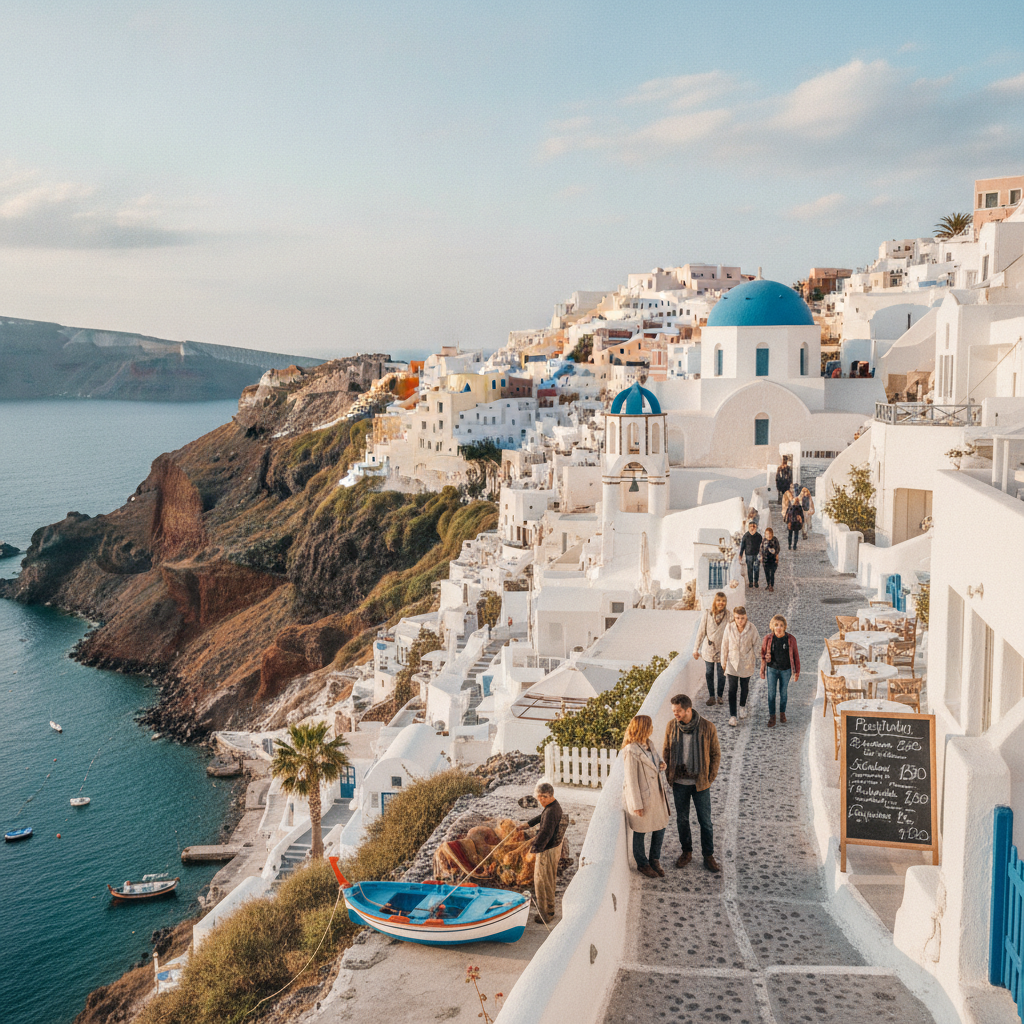
The Mediterranean has long operated on a rhythm that most travelers either work with or against, rarely understanding it fully. Peak season — roughly June through August — delivers sun-soaked coastlines and vibrant energy alongside overcrowded ferry terminals, inflated accommodation prices, and the particular exhaustion that comes from sharing a narrow Santorini alley with several thousand other visitors. Shoulder season, which broadly spans April through May and September through October, offers a genuinely different experience — one that changes not just the price of a hotel room but the entire texture of being somewhere.
Defining the Shoulder Season Window
Shoulder season isn't a fixed calendar event so much as a transitional zone between high demand and quiet off-season periods. In Mediterranean destinations, the spring shoulder runs from roughly mid-April through late May, while the autumn version stretches from early September through October. Both windows share certain qualities — milder temperatures, reduced tourist volume, and more predictable access to popular attractions — but they carry their own distinct character. Spring brings wildflowers along the Amalfi Coast and cooler sea temperatures, while autumn offers lingering warmth, harvest festivals, and the particular golden light that photographers favor across Greece and southern France.
How Crowd Levels Actually Shift
The reduction in visitor numbers during shoulder season is more dramatic than many travelers expect. Iconic sites like the Acropolis in Athens, Dubrovnik's old city walls, and the cliffside villages of Cinque Terre become genuinely manageable rather than merely endured. In peak July, queues at major attractions can stretch hours long and hotel lobbies feel transactional and rushed. By late September, those same spaces operate closer to their intended scale — smaller groups, more breathing room, and a pace that allows for actual engagement with the place rather than crowd management. The difference is perceptible almost immediately upon arrival.
The Pricing Reality Across Accommodation and Flights
Pricing behavior during shoulder season varies by destination, but the general trend holds across the region: accommodation rates drop meaningfully from their peak-summer heights, and popular properties become bookable with less advance notice. In places like Hvar, Croatia or the Aeolian Islands off Sicily, boutique hotels and rental villas that are fully committed months in advance during July often have availability and competitive rates through October. Flights follow a similar pattern, with routes from major European hubs into secondary Mediterranean airports becoming more affordable as leisure demand softens. The savings aren't trivial, and they compound — a lower nightly rate across a ten-day trip adds up considerably.
What Changes in Local Atmosphere and Daily Life
Perhaps the most underappreciated shift during shoulder season is what happens to the local atmosphere. Cities and villages that effectively hand themselves over to tourism during peak months begin to reclaim their own rhythms. In Barcelona's Gothic Quarter, in the backstreets of Valletta, or along the seafront promenades of Nice, the ratio of locals to visitors changes noticeably in autumn. Restaurants return to something closer to their original purpose — feeding a neighborhood — rather than operating as high-throughput visitor operations. Conversations with shopkeepers, hotel staff, and café owners carry more ease and less exhaustion. The experience of being a guest in a place feels more reciprocal.
Practical Tradeoffs Worth Considering
Shoulder season travel isn't without genuine tradeoffs, and understanding them helps set realistic expectations. Some beach-focused destinations in Greece and Croatia see certain businesses close after mid-October, meaning fewer dining options and reduced ferry frequencies between smaller islands. Spring travel, particularly in April, can bring unpredictable rainfall across Italy and Spain. Water temperatures in both shoulder windows are either too cold for comfortable swimming (spring) or cooling rapidly (late October). Travelers who define a successful Mediterranean trip primarily through beach time will find peak summer harder to replace. Those whose priorities lean toward culture, food, architecture, and atmosphere tend to find shoulder season clearly preferable.
Timing Your Trip Around the Shoulder Sweet Spots
If you're planning a Mediterranean trip with shoulder season in mind, the timing within the window matters as much as choosing the window itself. Late May sits at an almost ideal intersection — warm enough for outdoor dining, cool enough for long walks through historic centers, and still early enough that peak pricing hasn't fully arrived. Early October offers comparable conditions, with the added appeal of harvest season in wine-producing regions like Tuscany and the Languedoc. For cities with strong year-round cultural calendars — Rome, Athens, Lisbon — the shoulder period essentially extends their best qualities without the summer saturation. Booking accommodation three to six weeks out, rather than months ahead, is generally sufficient and gives more flexibility to adjust plans.
The Mediterranean has always rewarded travelers willing to work around its seasonal logic rather than simply following the crowd. Shoulder season represents less a budget hack than a fundamentally different kind of trip — one where the destination itself is more present, more accessible, and more willing to show what it actually is beneath the peak-season performance. The prices are better, the queues are shorter, and the light in September over the Aegean is, by most accounts, as close to perfect as travel gets.