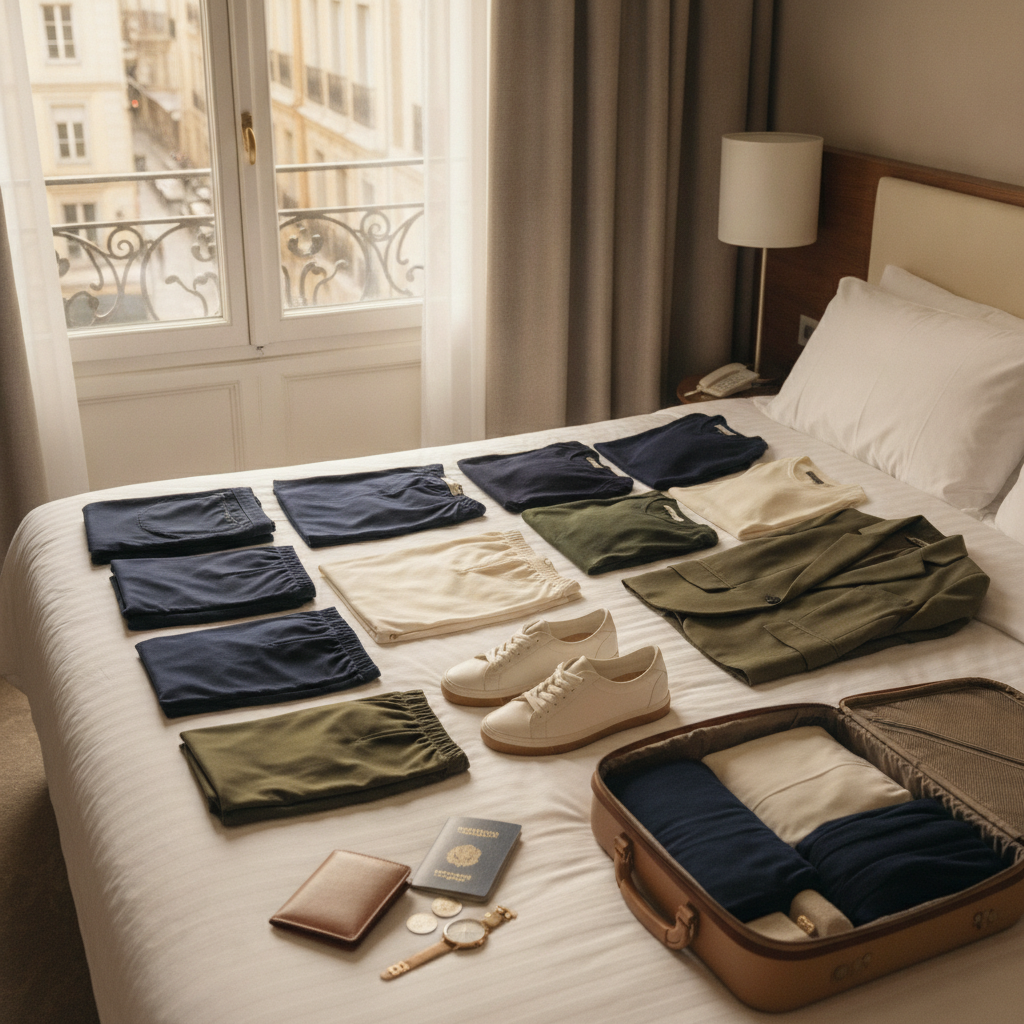
A wardrobe built around clarity outperforms one built around variety almost every time. The capsule wardrobe concept has been circulating in style circles for decades, but its real power lies less in minimalism as an aesthetic and more in the practical mechanics of how coordinated color systems reduce the hidden costs of getting dressed — costs measured in both money spent and minutes lost.
What Makes a Three-Color Wardrobe System Work?
The core idea is straightforward: anchor an entire wardrobe around three colors that work together seamlessly — typically a neutral base like navy, camel, or charcoal, a secondary tone that softens the palette, and a subtle accent. When every item shares a common color logic, nearly every combination becomes wearable without effort. Brands like Everlane, COS, and Quince have built their product lines almost entirely around this principle, offering basics that are designed from the start to layer and rotate without conflict. The result is a closet where everything earns its space.
How Does Seasonal Shopping Create Hidden Costs?
Seasonal hauls feel like fresh starts, but they tend to introduce wardrobe fragmentation. A trend-driven piece bought in spring rarely integrates with items purchased the previous fall, which means it competes for attention rather than contributing to a working system. Over time, these orphaned items pile up — worn once, then sidelined because nothing else quite matches. The real expense isn't the purchase price of any single item; it's the cumulative cost of buying things that don't multiply their value by pairing with what's already owned. A wardrobe full of isolated statements is one that constantly demands new additions.
Why Does Getting Dressed Take So Long for Most People?
Decision fatigue is a well-documented phenomenon, and the morning wardrobe routine is one of its most common triggers. When a closet contains dozens of colors, patterns, and silhouettes that don't naturally connect, every outfit requires active problem-solving. That daily friction accumulates into real time — not just minutes per morning, but mental energy that carries into the rest of the day. A three-color palette eliminates most of that friction at the source. When a charcoal blazer works equally well over a cream blouse, a slate tee, or a soft grey knit, the decision is already half made before the day begins.
Which Pieces Anchor a Capsule Wardrobe Most Effectively?
The foundation of any effective capsule wardrobe is a short list of high-use items that appear in multiple combinations: well-fitted trousers, a structured outer layer, a few quality knits, and versatile footwear in the palette's neutral base. Retailers like Uniqlo and M.M. LaFleur have built entire business models around this exact framework, offering collections designed to mix within themselves. The key metric isn't how many items a wardrobe contains, but how many distinct outfits those items can generate. A fifteen-piece capsule built around three coordinated colors can realistically produce more wearable combinations than a forty-piece closet assembled without a color strategy.
How Does the Cost-Per-Wear Calculation Change Everything?
For shoppers accustomed to tracking price tags, shifting attention to cost-per-wear reframes how value works in a wardrobe context. A quality camel coat that retails at a higher price but gets worn four months a year for several years costs far less per use than a trendy jacket bought on sale and worn three times before it stops feeling relevant. When pieces are built around a stable color system, they retain their wearability across seasons without needing updates or replacements. The wardrobe starts to behave more like an investment portfolio than a rotating inventory — each item appreciating in value through repeated, intentional use.
How Can You Start Building Your Own Three-Color Capsule?
Starting small is the most practical approach. Begin by pulling out what you already own and identifying which colors appear most often in pieces you actually reach for. Those recurring tones are likely your natural palette anchors. From there, you can audit what's missing and fill gaps deliberately rather than reactively. Apps like Stylebook help organize existing items visually, making it easier to spot coordination gaps before buying anything new. Resist the pull of seasonal displays in stores like Zara or H&M and focus purchases on pieces that extend your existing color logic rather than interrupt it. Even shifting one or two seasonal buys per year into capsule-aligned choices begins to change the pattern.
The case for building a wardrobe around three core colors isn't a style argument — it's a systems argument. When clothes share a common color logic, they multiply in usefulness rather than compete for relevance. The daily friction of getting dressed drops, the accumulation of unworn pieces slows, and the long-term cost of maintaining a functional wardrobe falls considerably. Seasonal hauls offer novelty, but novelty without integration rarely delivers lasting value. A smaller, more deliberate wardrobe built around three well-chosen colors tends to serve people better across every dimension that actually matters.