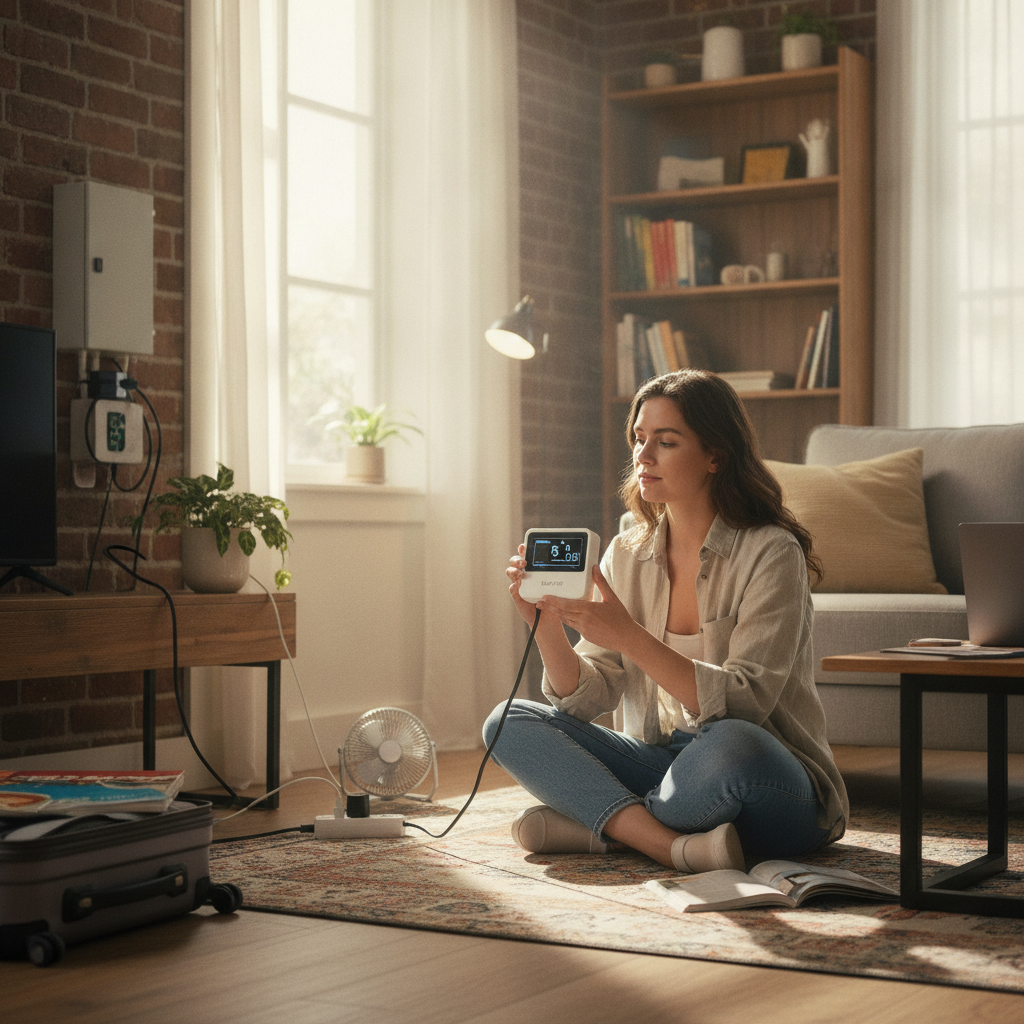
Renters have historically been locked out of the home energy optimization conversation, left to pay whatever utility bills arrive each month without the tools or permissions to investigate why. Smart home energy monitors have changed that equation significantly. These compact, non-invasive devices plug directly into existing outlets or attach to electrical panels without altering any wiring, making them fully compatible with rental agreements that prohibit structural modifications. As energy costs continue climbing in cities across the country, more renters are turning to these devices not as a luxury but as a practical financial tool.
What Smart Energy Monitors Actually Measure
A smart energy monitor tracks electricity consumption at the circuit or device level, depending on the model, and translates that raw data into readable insights through a connected app. Devices like the Emporia Vue and the Sense Energy Monitor are among the most widely used options, each offering different levels of granularity in how they display energy use. The Sense monitor, for instance, uses machine learning to identify individual appliances by their electrical signatures, meaning it can tell the difference between a refrigerator cycling on and a laptop charging. This level of specificity allows renters to pinpoint exactly which devices are driving up monthly costs.
Why Renters Specifically Benefit From These Tools
Homeowners can replace inefficient appliances, add insulation, or upgrade HVAC systems when energy bills become a problem. Renters typically cannot. What they can do is understand their consumption patterns well enough to change how and when they use electricity. A monitor that reveals a space heater is responsible for a disproportionate share of the monthly bill gives a renter real information to act on — whether that means using it less, replacing it with a more efficient model, or requesting that the landlord address a drafty window. The data shifts the dynamic from passive bill-payer to informed consumer.
How Non-Invasive Installation Works in Practice
The appeal of most renter-friendly energy monitors lies in how they connect to a home's electrical system without requiring any permanent changes. Plug-in smart meters, like those compatible with the Kasa Smart app, simply occupy an outlet and measure whatever device is plugged into them. Whole-home monitors like the Emporia Vue clip onto the main breaker panel using current transformer sensors — no wiring changes required — and can be removed cleanly when moving out. Some renters pair multiple plug-in monitors with a single whole-home device to get both granular and comprehensive data simultaneously, building a detailed picture of their energy use over time.
Turning Raw Data Into Monthly Savings
Collecting energy data is only useful if it leads to action, and this is where the app experience becomes essential. Most monitors sync with smartphone apps that display real-time usage, historical trends, and cost projections based on local electricity rates. You can set custom alerts that notify you when usage spikes unexpectedly, flag devices left running unnecessarily, or track how changes in behavior affect the monthly total. Setting the dishwasher to run at night, for example, can reduce costs in regions that use time-of-use pricing — and a monitor will confirm whether that shift is actually making a difference. Small behavioral changes, confirmed by real data, tend to stick.
Integrating Monitors With Smart Plugs and Automation
Energy monitors become significantly more powerful when paired with smart plugs and basic home automation. A smart plug connected to a Google Home or Amazon Alexa ecosystem can automatically cut power to a television or gaming console during hours when no one is typically home, based on schedules or presence detection. The monitor then validates whether those automated rules are working as intended by showing the before-and-after consumption data. This layered approach — monitor, smart plug, automation rule, data confirmation — creates a feedback loop that requires no technical expertise and no permanent installation. Renters in cities like Chicago, Austin, and Seattle have adopted this setup to manage bills in apartments where landlords control the thermostat settings.
Building a Smarter Renter Energy Routine
If you're ready to get started, the practical path forward is more straightforward than it might seem. Begin with a single plug-in monitor on your highest-consumption device — usually a space heater, window AC unit, or a home office setup running multiple screens. Use the app data for two to four weeks to establish a baseline, then introduce one behavioral change at a time and measure the result. Once you're comfortable interpreting that data, consider adding a whole-home monitor to see the full picture. Look for devices that export data as a CSV file, which makes it easy to track patterns across billing cycles and build a longer-term view of your energy habits.
The trajectory for smart energy monitoring is moving toward deeper integration with utility providers, with some companies already offering programs that allow monitors to communicate directly with the grid during peak demand periods. As rental housing becomes more common and energy costs more variable, the tools designed for renters will only grow more sophisticated. The current generation of monitors already offers enough insight to make a measurable difference in monthly costs — and the next generation is likely to make that process even more automatic.