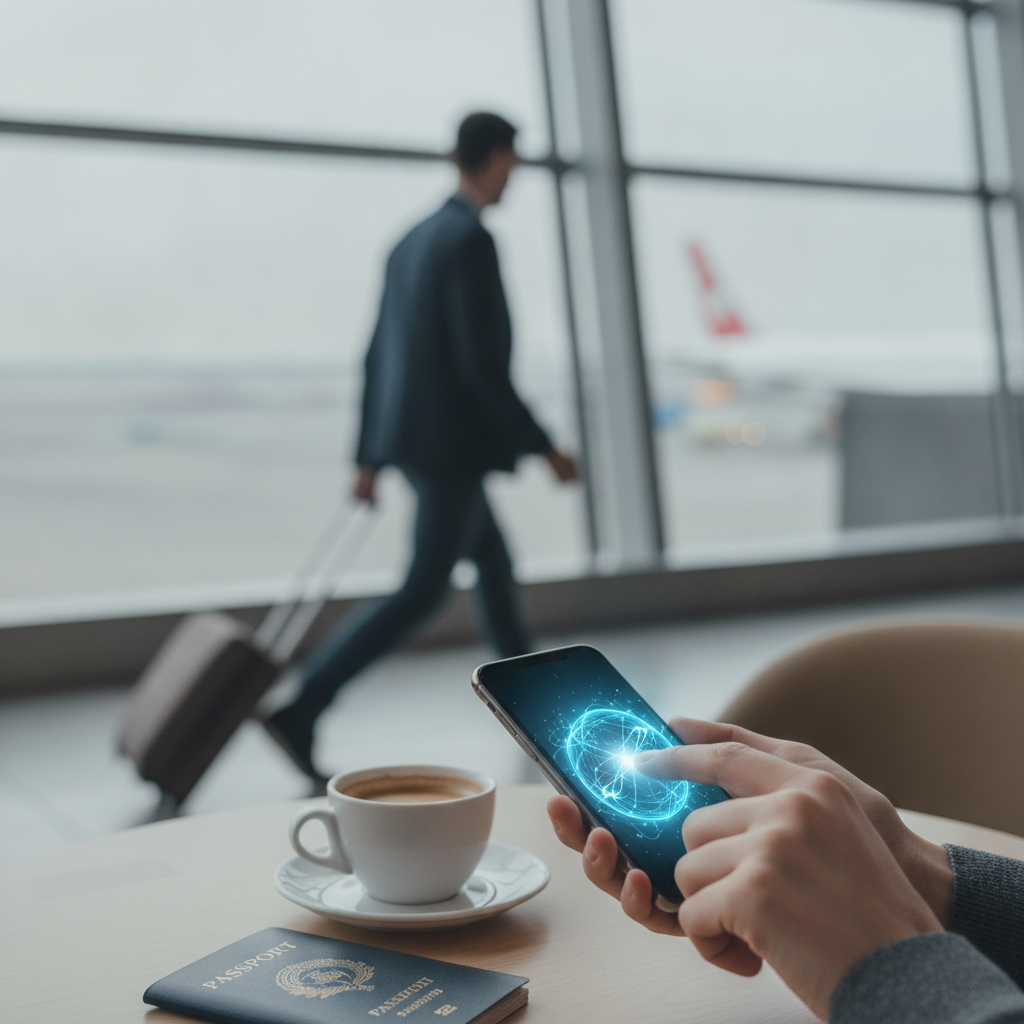
The way people prove their identity to digital services is undergoing one of the most significant quiet shifts in the history of consumer technology. For decades, the password stood as the default gatekeeper between a user and their accounts — an approach that was always flawed but tolerated because nothing better had scaled widely enough to replace it. That tolerance is now wearing thin, and the technology filling the gap is already embedded in the devices most people carry every day.
Why Traditional Passwords Have Always Been a Weak Foundation
Passwords were never designed for the volume and variety of services that modern users manage. The average person juggles dozens of accounts across banking apps, streaming platforms, email services, and social media — and the cognitive load of maintaining unique, complex passwords for each one is genuinely unsustainable. When people reuse passwords out of necessity, a single data breach can compromise multiple accounts simultaneously. Security researchers have long flagged this as a structural problem, not a user behavior problem, and the authentication industry has slowly begun to respond with solutions that remove the password from the equation entirely.
What Passkeys Actually Are and How They Work
Passkeys are cryptographic credentials that replace passwords by using a pair of mathematically linked keys: one stored on the user's device and one held by the service they're logging into. When a user authenticates, their device uses biometric verification — a fingerprint scan or face recognition — to confirm identity locally, then cryptographically signs a challenge from the server without ever transmitting a password. Apple, Google, and Microsoft all adopted the FIDO2 standard that underpins passkeys, which means the technology works across iPhones, Android devices, Windows machines, and major browsers. The result is an authentication method that is both more secure and considerably less effortful than typing a password.
The Apps and Platforms Already Moving Away From Passwords
The shift is already visible across mainstream consumer apps. PayPal was among the first major financial platforms to roll out passkey support, followed by services like Shopify and GitHub, which serve millions of users globally. Apple's iCloud Keychain and Google Password Manager both store and sync passkeys across devices, making the transition largely invisible to the end user. Even Microsoft has moved aggressively toward passwordless sign-in for its consumer accounts, allowing users to remove the password from their Microsoft account entirely. This convergence across major technology ecosystems signals that passkeys are no longer a niche security feature — they are becoming infrastructure.
The Role of Biometrics in a Passwordless World
Biometric authentication sits at the center of the passkey experience, acting as the local verification layer that unlocks the cryptographic credential stored on the device. Face ID, Touch ID, and similar systems from Android manufacturers handle this step, which means the biometric data itself never leaves the device — it is not transmitted to a remote server or stored in a company's database. This design choice addresses one of the most common anxieties people have about biometric systems: that their physical characteristics could be stolen or misused in a breach. Because the biometric only unlocks the local key rather than serving as the authentication signal itself, the security architecture is fundamentally more resilient than password-based systems.
What Passwordless Authentication Means for Phishing and Account Takeovers
One of the most consequential advantages of passkeys is that they are inherently resistant to phishing attacks, which remain the leading cause of account compromise across consumer and enterprise environments. A traditional password can be tricked out of a user through a convincing fake login page — a tactic that costs relatively little to execute and continues to succeed at scale. Passkeys cannot be phished in the same way because they are cryptographically bound to a specific domain; a fake login page for a service like Netflix would receive a response that is mathematically useless for accessing the real account. This structural immunity to phishing is arguably the most practically significant security benefit that passkeys offer over any password-based system.
How to Start Using Passkeys Across Your Everyday Accounts
If your device runs iOS 16 or later, Android 9 or later, or a recent version of Windows, you already have the hardware and software needed to use passkeys. Start by checking the security settings on accounts you access frequently — PayPal, Google, Apple ID, and GitHub all offer passkey enrollment, usually found under a section labeled "Sign-in and Security" or "Password and Authentication." When you enroll, your device will create the passkey and store it in your password manager automatically, whether that's iCloud Keychain, Google Password Manager, or a third-party option like 1Password. From that point forward, logging in to the enrolled service requires only a biometric confirmation, with no password to remember or type. Adopting passkeys on even two or three high-value accounts meaningfully reduces your exposure to the most common forms of account compromise.
The broader movement toward passwordless authentication reflects a rare convergence of better security and better user experience — two goals that have historically been in tension with each other in the design of digital systems. As Apple, Google, and Microsoft continue to expand passkey support and more apps follow their lead, the friction of maintaining traditional passwords will increasingly feel like an artifact of an older, more vulnerable era. The transition is gradual, and passwords will persist in less-updated corners of the internet for years to come, but the direction is clear. The default method of proving digital identity is changing, and for most everyday users, that change is already within reach.