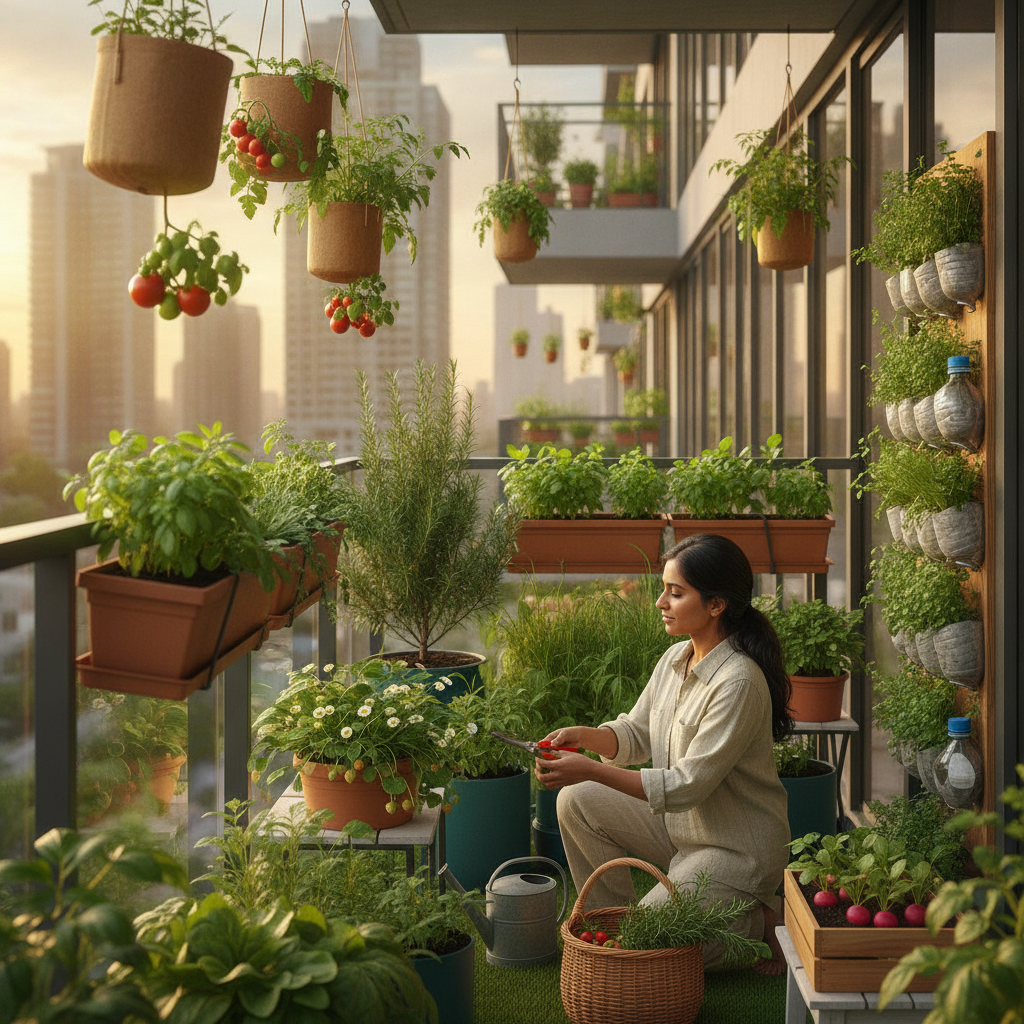
Somewhere between a grocery run and a lifestyle shift, a quiet movement is taking root on the ledges and railings of city apartments. Across dense urban neighborhoods — from Brooklyn's Bushwick to London's Hackney to the high-rise corridors of Singapore — small containers of herbs, leafy greens, and compact fruiting plants are appearing on balconies that were once home to nothing more than a folding chair and a forgotten bicycle. This isn't gardening in the traditional sense. It's something more deliberate, more practical, and more suited to the realities of apartment living in an era where food costs have become a recurring household concern.
The Shift From Decorative to Functional Outdoor Space
For years, balconies in apartment buildings occupied an ambiguous role — too small for proper entertaining, too exposed for true privacy, and often neglected entirely. What has changed isn't the size of these spaces but the way their potential is being understood. Apartment dwellers are beginning to treat outdoor square footage, however modest, as productive real estate rather than wasted footage. The logic is straightforward: a few well-chosen containers of basil, cherry tomatoes, or microgreens can provide a consistent, usable yield without demanding the time or skill that traditional gardening requires. Organizations like the Balcony Garden Web and resources within apps such as Planta have helped demystify the process considerably.
Why Compact Edibles Outperform Ornamental Choices
The term *edimentals* — a portmanteau of edible and ornamental — has gained traction among urban horticulturists to describe plants that serve both aesthetic and practical purposes simultaneously. Kale, rainbow chard, and trailing nasturtiums are among the most cited examples, offering visual texture while producing leaves that go directly into meals. What makes compact edibles especially suited to balcony environments is their tolerance for container life and their relatively short harvest cycles. Unlike ornamental plants, which require care without delivering anything back to the household, edibles create a feedback loop. The more attentively they're tended, the more they contribute — a relationship that many apartment gardeners find quietly rewarding.
The Economics of Growing Your Own Herbs and Greens
The financial case for balcony edible gardening is modest but real. Herbs like rosemary, thyme, and mint — perennials in mild climates — represent some of the clearest value propositions, since small packets of fresh herbs at grocery stores carry a price premium disproportionate to the actual volume they deliver. A single pot of basil purchased from a nursery, properly cared for, can outlast and outproduce dozens of those plastic-wrapped supermarket bunches. Leafy greens like arugula and spinach grow quickly from seed and can be harvested in a cut-and-come-again fashion, meaning one planting provides multiple yields over a season. The upfront costs — containers, quality potting mix, perhaps a grow light for shadier balconies — pay themselves back gradually but consistently.
Soil, Light, and the Logic of Container Gardening
Successful balcony edible gardening begins with understanding the constraints of container growing, which differs from in-ground cultivation in ways that matter. Containers dry out faster, heat up more quickly in direct sun, and require more deliberate nutrition since nutrients leach out with regular watering. A quality peat-free potting mix, combined with a slow-release organic fertilizer, addresses most of these challenges without demanding expert-level knowledge. Light is typically the more limiting factor in urban settings — most edibles require at least six hours of direct sun daily, and balconies facing north or hemmed in by taller buildings may fall short of that threshold. For those situations, compact LED grow lights designed specifically for small spaces, like those offered by brands such as Mars Hydro, have made year-round production surprisingly achievable.
Community Gardens as a Gateway and a Complement
For apartment dwellers whose balconies are too small or too shaded for productive growing, community garden plots have become an important complement to the balcony approach. Cities like Portland, Melbourne, and Amsterdam have expanded their community allotment programs in recent years, recognizing that demand from urban residents has outpaced available space. Waiting lists remain a reality in many areas, but the experience of tending a small plot — even once a week — tends to reinforce the habits and knowledge that translate back to whatever growing space exists at home. The two practices feed each other in a practical sense: lessons learned in a community plot improve results on the balcony, and vice versa.
What Apartment Gardening Offers Beyond the Harvest
The practical food supplement value of balcony gardening is real, but it doesn't fully account for why the practice is spreading so steadily through urban populations. Research into human wellbeing has long suggested that contact with growing things — tending, watering, observing seasonal change — produces measurable reductions in stress and an increased sense of daily purpose. The Japanese concept of *sato-yama* (the idea of a harmonious zone where human habitation meets productive nature) offers one cultural framework for understanding why city dwellers feel drawn to growing food even when they don't need to for survival. Apartment gardens represent a small but genuine bridge between the built environment and the biological rhythms that most urban schedules tend to suppress.
Starting Small, Staying Consistent
If you're considering making your balcony more productive, the most reliable advice is the least dramatic: start with one or two plants you actually cook with, choose containers with adequate drainage, and commit to checking on them daily. Basil for pasta, mint for tea, a single cherry tomato plant in a deep pot — these small beginnings establish the routine without overwhelming the available space or attention. Consistency matters more than scale. A modestly planted balcony that's watered and harvested regularly will deliver far more value than an ambitious setup that's abandoned by midsummer.
The balcony that once held nothing but a chair and a view has become, for a growing number of apartment residents, a small but meaningful source of food, calm, and connection to something that grows on its own schedule — indifferent to city noise, and quietly generous to those who pay attention.