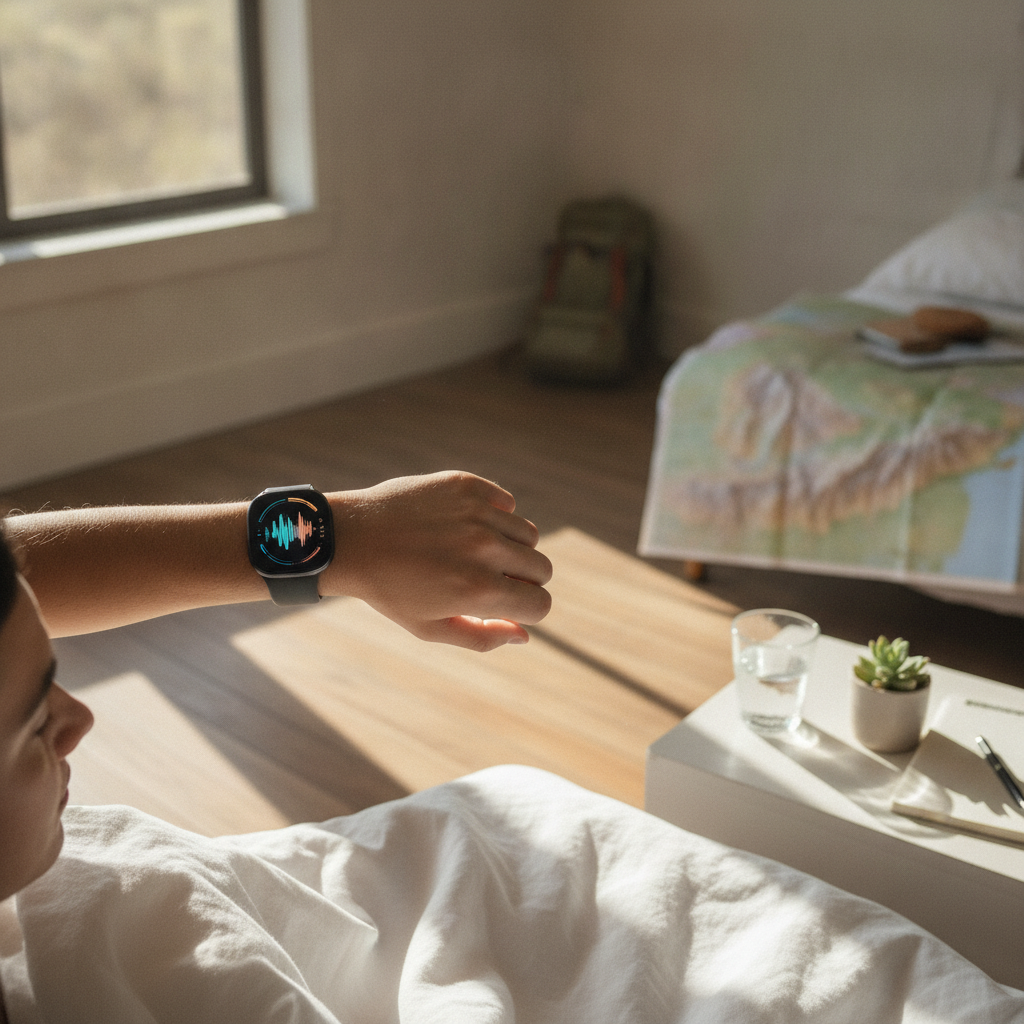
Smartwatches have quietly transformed from step counters into sophisticated personal health tools, and nowhere is that shift more apparent than in how they monitor sleep. What began as a simple tally of hours rested has grown into a granular, science-informed system that breaks down each night into distinct biological phases — and tells the wearer what those phases actually mean for their daily performance.
The Limits of Early Sleep Duration Tracking
When fitness bands first introduced sleep tracking, the metric was blunt: total time asleep, sometimes split into a rough estimate of light versus restless periods. Devices from the early Fitbit era worked primarily through accelerometry — detecting stillness as a proxy for sleep — rather than any direct physiological measurement. While these readings gave users a starting point for awareness, they offered little context. Knowing that someone slept six hours says almost nothing about whether those six hours were restorative, fragmented, or dominated by shallow sleep stages that leave the body underrecovered.
The Science Behind Sleep Stages and Why They Matter
Sleep isn't a uniform state. The body cycles through distinct phases across the night, each serving a different biological function. Light sleep serves as a transitional state, deep sleep — sometimes called slow-wave sleep — is when the body repairs tissue and consolidates immune function, and REM sleep is the phase most associated with memory processing and emotional regulation. Missing out on adequate deep or REM sleep, even with a full eight hours in bed, can result in the kind of fatigue and cognitive fog that duration-only metrics would never flag. Understanding these distinctions is what pushed wearable manufacturers toward more sophisticated sensing methods.
How Optical Sensors and Heart Rate Variability Changed the Picture
The breakthrough in sleep stage accuracy came through the combination of photoplethysmography — the optical heart rate sensors embedded in most modern smartwatches — and heart rate variability analysis. Devices from Apple, Garmin, and Samsung began using subtle changes in heart rate patterns, respiratory rate, and even blood oxygen levels to infer which sleep stage the wearer was in at any given moment. Garmin's Body Battery feature and Apple Watch's sleep stage breakdowns, for instance, now generate nightly reports that distinguish between REM, core, and deep sleep with a level of granularity that was once confined to clinical sleep studies. The accuracy isn't perfect compared to polysomnography, but for consumer-grade insight, the improvement over simple motion detection has been substantial.
Recovery Scores and What They Actually Measure
One of the more meaningful developments in wearable sleep technology is the shift from raw data toward interpreted recovery scores. Platforms like WHOOP and Garmin's Connect app translate overnight physiology into a single daily readiness number, factoring in sleep stage distribution, heart rate variability trends, and sleep consistency over time. These scores give users a practical signal — not just how long they slept, but how well their body has recovered from the previous day's physical and mental load. A night with strong deep sleep and stable HRV might produce a high recovery score even if total duration was modest, while a long night with fragmented REM might register as poor recovery despite the hours logged.
Stage-Specific Coaching and Personalized Recommendations
Modern sleep platforms have moved past reporting and into recommendation. If you consistently show low deep sleep percentages, apps like Fitbit Premium or the Samsung Health platform may suggest adjustments to evening routines, flag alcohol consumption patterns captured through elevated overnight heart rate, or recommend earlier sleep windows. Some platforms now integrate with third-party wellness apps to connect sleep stage data with exercise timing, caffeine intake logging, and stress scores. The result is a feedback loop that treats sleep not as a nightly outcome but as an ongoing, adjustable variable tied to dozens of daily habits — each one potentially shifting how much restorative deep sleep the body achieves.
Using Sleep Stage Data Practically Without Overcomplicating Recovery
For anyone wearing a modern smartwatch, the most useful approach is to treat sleep stage trends over one to two weeks rather than obsessing over a single night's breakdown. A single low deep-sleep reading carries less meaning than a consistent pattern. Pay attention to how your REM percentage shifts after high-stress periods, or how your deep sleep responds to changes in exercise timing. If your device offers a readiness or recovery score, use it as a calibration tool rather than a hard directive — it works best when you cross-reference it against how you actually feel. Resist the temptation to chase perfect scores nightly; recovery is cumulative, and consistency in sleep timing often matters as much as any single metric the watch reports.
Sleep tracking on wearables started as a rough approximation of rest and has evolved into one of the more practically useful health signals a smartwatch can deliver. The shift from duration to stage-by-stage recovery insight reflects a broader maturation in consumer health technology — one that respects the complexity of human biology rather than reducing it to a single number. For users willing to engage with the data over time, modern sleep tracking offers something genuinely valuable: a clearer window into how the body actually recovers, and what small changes might make that recovery meaningfully better.