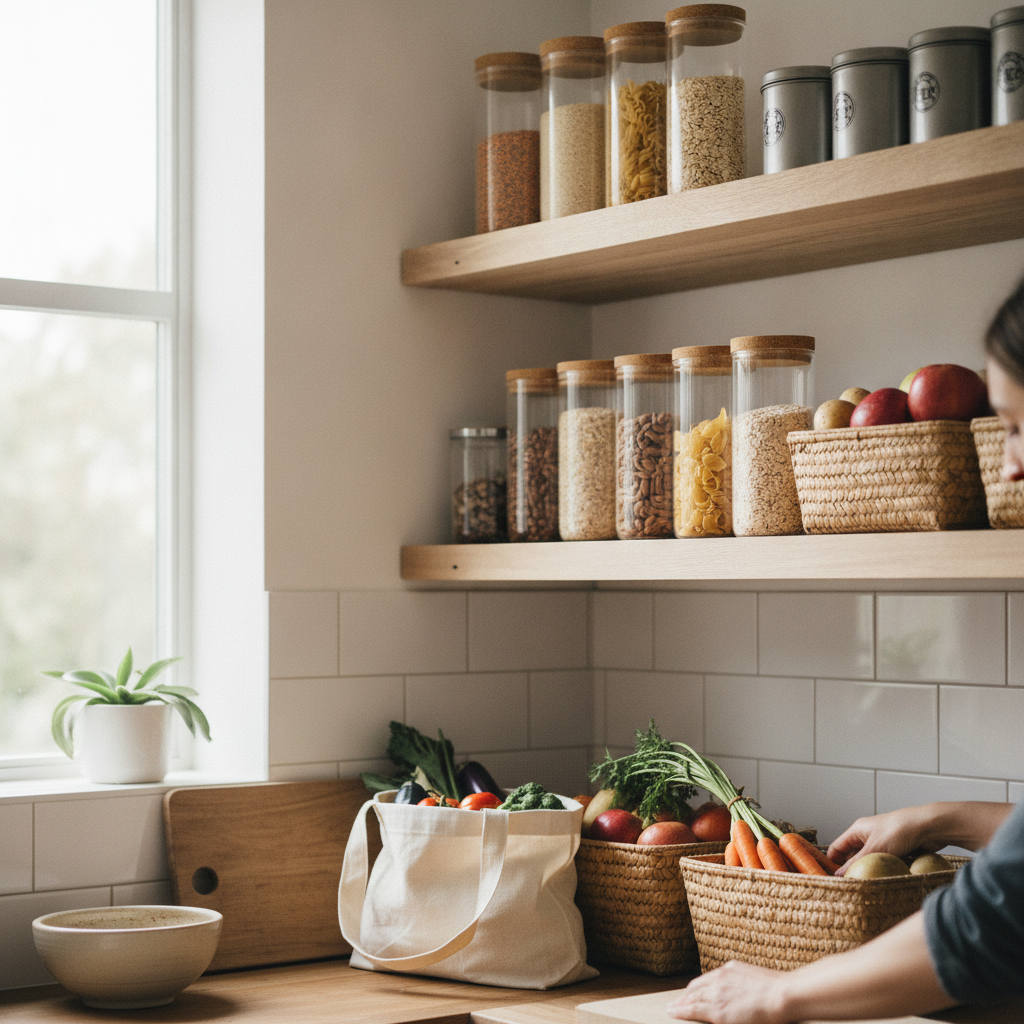
Most kitchens hide a quiet problem behind closed cabinet doors. Canned goods get pushed to the back, forgotten vegetables wilt in the crisper drawer, and somehow the grocery bill climbs higher every week despite the fridge already being full. The issue usually isn't how much you're buying — it's how little visibility you have into what you already own. A single-shelf pantry system solves this without requiring meal prep schedules, color-coded containers, or a complete kitchen renovation.
What Does a Single-Shelf Pantry System Actually Mean?
The concept is simpler than it sounds. Instead of spreading dry goods, canned items, and packaged staples across multiple shelves, drawers, and cabinets, you consolidate everything into one designated shelf — a single, always-visible zone where your pantry inventory lives. Think of it as a command center rather than a storage area. Apps like Pantry Check or a simple label system from brands like OXO can help you maintain the shelf without turning it into a project. The goal is immediate visual clarity every time you open the cabinet.
How Does Visibility Change Your Shopping Habits?
When everything is visible at a glance, you stop buying duplicates. Buying a second jar of tahini because you couldn't see the first one already hiding behind a soup can is an extremely common and costly habit. A single shelf forces your pantry into your line of sight before every grocery run. Shoppers who can see their inventory clearly tend to buy fewer redundant items and spend meaningfully less per trip over time. The savings aren't dramatic in one week, but they compound steadily across a month or a year.
Why Does Reducing Hidden Inventory Cut Food Waste?
Food waste happens most often at the edges of visibility — the items shoved to the back of a shelf or buried under something else. When those items stay hidden, they expire before anyone uses them. A single-shelf system eliminates the "back row" entirely. Everything is front-facing, and nothing gets forgotten for three months. This matters especially for dry goods with shorter shelf lives than people expect, like nut flours, whole grain crackers, and certain spices. Keeping them visible means they actually get used in the rotation.
How Should You Set Up the Shelf Without Overcomplicating It?
Start with a purge rather than a reorganization. Pull everything out of your pantry cabinets and assess honestly — donate unexpired items you genuinely won't use and toss anything past its date. Then select one shelf, ideally at eye level, and place only what you actively cook with. Use consistent container sizes where possible; brands like OXO or Cambro make stackable, clear containers that make scanning easy. Group items loosely by category — grains together, canned goods together, snacks together — but keep the system loose enough that you'll actually maintain it.
What Happens to Your Weekly Grocery List When the Pantry Is Organized?
Your grocery list gets shorter and more accurate. Rather than buying items "just in case" or recreating meals from vague memory, you shop from a real picture of what's already there. This shifts grocery trips from habit-based restocking to need-based buying. Over a few weeks, you'll notice certain staples stretch further than expected because you're actually finishing what you have before replacing it. Stores like Trader Joe's and Aldi are easier to shop at efficiently when you arrive with a precise, minimal list rather than a vague mental inventory.
How Does the System Work Without Any Meal Prepping?
Meal prepping requires time, planning, and a level of commitment that doesn't fit everyone's lifestyle. The single-shelf system doesn't ask for any of that. It works passively — once set up, it simply changes what you see every time you cook. You'll naturally start building meals around what's already there rather than defaulting to takeout or making a last-minute store run. The visibility itself prompts creativity. When you can see a can of chickpeas, a bag of farro, and a jar of roasted peppers, dinner becomes obvious without any advance planning.
How Do You Maintain the Shelf Without It Reverting to Chaos?
The system only works if restock stays simple. Every time you bring groceries home, put new items behind older ones — a basic first-in, first-out habit that takes five seconds. Every few weeks, do a quick scan for anything approaching its expiration date and move it forward. Resist the urge to overflow the shelf. If something doesn't fit, that's a signal to use it before buying more of the same category. The constraint is the point — one shelf keeps the system honest and prevents the slow creep back toward cluttered, invisible storage.
Why Is a Low-Effort System More Sustainable Than an Elaborate One?
Complex organizational systems often collapse within weeks because the maintenance cost is too high. A single shelf sidesteps that problem by staying minimal by design. There's nothing to track, no app to update daily, and no schedule to maintain. The simplicity is what makes it durable. You don't need to be a naturally organized person for this to work — you just need one shelf with enough empty space that things don't pile up. That one constraint does most of the heavy lifting on its own.
A single-shelf pantry system won't transform your entire relationship with food overnight, but it will quietly change how you shop and cook over the weeks that follow. Less waste, fewer redundant purchases, and a clearer picture of what you actually eat — those benefits arrive gradually and then become the new normal. Start with the purge, pick your shelf, and let the visibility do the rest.