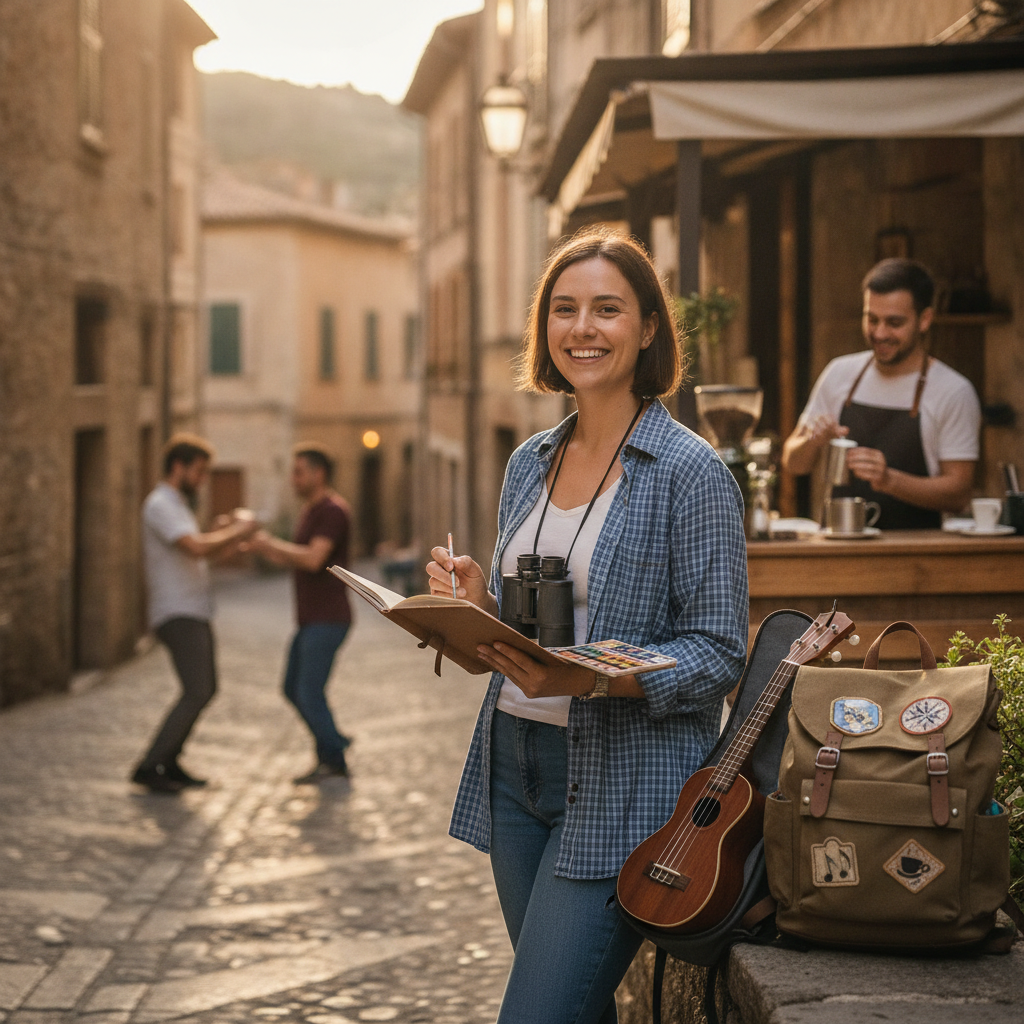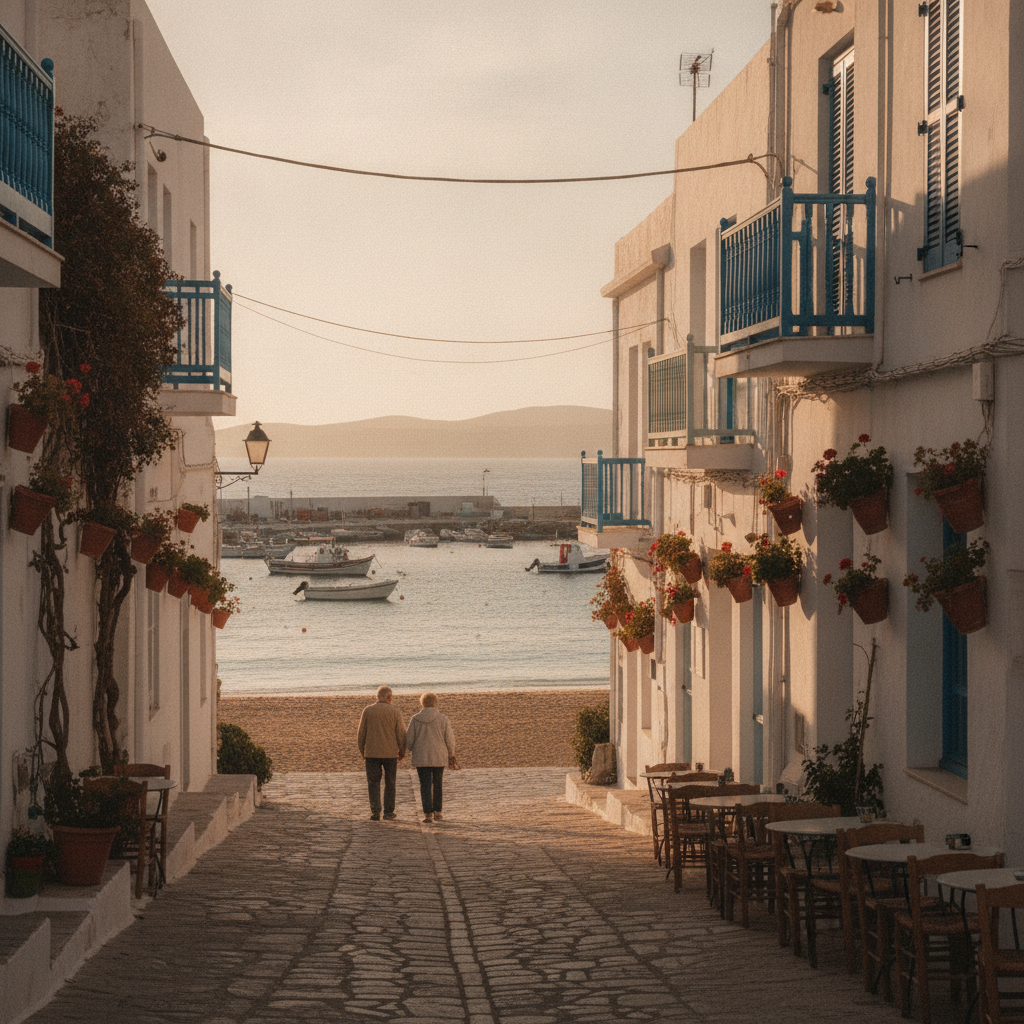
There is a particular version of the Mediterranean that most travelers never actually see. It exists not in the sunbaked, shoulder-to-shoulder July crowds that queue for hours outside cliff-top churches, but in the quieter weeks on either side of that frenzy — when the light turns golden rather than white, the cafés empty out by evening, and something resembling real local life quietly resurfaces along the waterfront.
The Rhythm of the Off-Peak Coast
Shoulder season in Mediterranean terms generally refers to the stretch from late April through early June and again from mid-September through October. During these windows, the infrastructure of coastal tourism remains intact — restaurants are open, boats run, hotels are staffed — but the overwhelming volume of peak-summer visitors simply isn't there. In a village like Manarola in the Cinque Terre, this difference is almost architectural in feeling: the narrow stone paths that become impassable in August can be walked slowly, with pauses, without the sensation of being carried along by a crowd. The place reveals its actual proportions. Travelers who choose these months aren't sacrificing access to the destination; they're gaining access to its texture.
The practical advantages are real and compounding. Accommodation costs drop considerably during shoulder periods, and availability opens up in properties that book out entirely by February for July dates. Ferries, regional trains, and small-boat excursions operate with shorter queues and, often, more reliable schedules because operators aren't managing crisis-level demand. A traveler spending ten days along the Amalfi Coast in late September will find that the time previously absorbed by logistics — waiting, booking, repositioning — is returned to them as usable hours. That time, accumulated across a trip, changes the entire quality of the experience.
What Locals Call the Real Season
In many Mediterranean coastal communities, the shoulder months are what residents themselves refer to as the *bella stagione vera* — the true beautiful season. The phrase is informal but widely understood, particularly in Italian coastal culture, where summer tourism is treated as a kind of necessary endurance rather than a celebration. The produce markets in Syracusa, Sicily, are at their most varied in October. The olive harvest begins in earnest across the Greek islands in November, and in Crete, the weeks following the tourist exodus reveal a culinary calendar that functions almost independently of visitor expectations.
This isn't a romantic fantasy projected onto these places by outsiders. It reflects an observable seasonal logic: the things that make Mediterranean towns genuinely worth visiting — the food culture, the architectural heritage, the social rituals of the *passeggiata* (the evening promenade that functions as informal community gathering) — all persist and deepen once the summer infrastructure of beach bars and souvenir stalls closes down. The traveler who arrives in October in Kotor, Montenegro, finds the old city lit differently, populated differently, and priced differently than the one who arrives in July.
Atmosphere, Pricing, and What Actually Changes
The financial difference between shoulder and peak travel in Mediterranean destinations is not marginal. Flight routes that serve beach-heavy markets see significant fare drops once summer charter demand falls away. A direct connection into Dubrovnik or Palermo from major European hubs can cost less than half the July equivalent when booked for late September. Hotel rates in premium coastal positions — the kind of properties overlooking the water in Positano or along Corsica's western shore — often return to a range that feels reasonable for what they offer rather than simply inflated by scarcity.
Beyond cost, there's an atmospheric shift that's harder to quantify but immediately felt. Restaurants that spend summer operating in pure throughput mode — turning tables, running fixed menus, managing noise — slow down and return to something closer to their original character. A meal in a small trattoria in the Aeolian Islands in October is a different social experience than the same meal in August, not because the food has changed but because the environment around it has. Servers have time. Tables aren't turning. The kitchen isn't under siege. What emerges is something closer to hospitality in its actual sense rather than its scaled, commodified summer form.
How to Plan Around the Shoulder Window
Planning a shoulder-season Mediterranean trip requires a slightly different approach than peak booking. Some attractions operate on reduced hours from October onward, and a handful of smaller island ferry connections run fewer departures per week. The key is to confirm operational schedules directly rather than assuming summer hours carry through. Apps like Rome2rio and direct regional ferry operator sites — such as Grimaldi Lines for western Mediterranean crossings — are more reliable than aggregators for confirming shoulder timetables.
Accommodation choice also shifts in this period. Larger resort hotels sometimes close for the season by mid-October, but this is generally offset by the availability of smaller guesthouses and apartment rentals that operate year-round and are often more representative of local life. Platforms that filter by year-round availability make this easier to identify in advance. Packing adjusts as well — evenings along the Adriatic in late September carry a genuine chill, and layering becomes practical rather than optional.
A Different Kind of Return
There is something particular about leaving a Mediterranean coastal town in October — the way the light sits low over the water in the late afternoon, the harbor quieter than it was a month ago, the restaurant owners starting to think about their own off-season travel. For the traveler who chose these weeks deliberately, the experience has a completeness to it that high summer rarely offers. The destination was encountered on something closer to its own terms: not as a backdrop for peak-season performance, but as a place with its own rhythms, its own calendar, and its own idea of what a beautiful day actually looks like. That version of the Mediterranean — the one the crowds mostly miss — is neither secret nor inaccessible. It simply requires showing up at a different time.