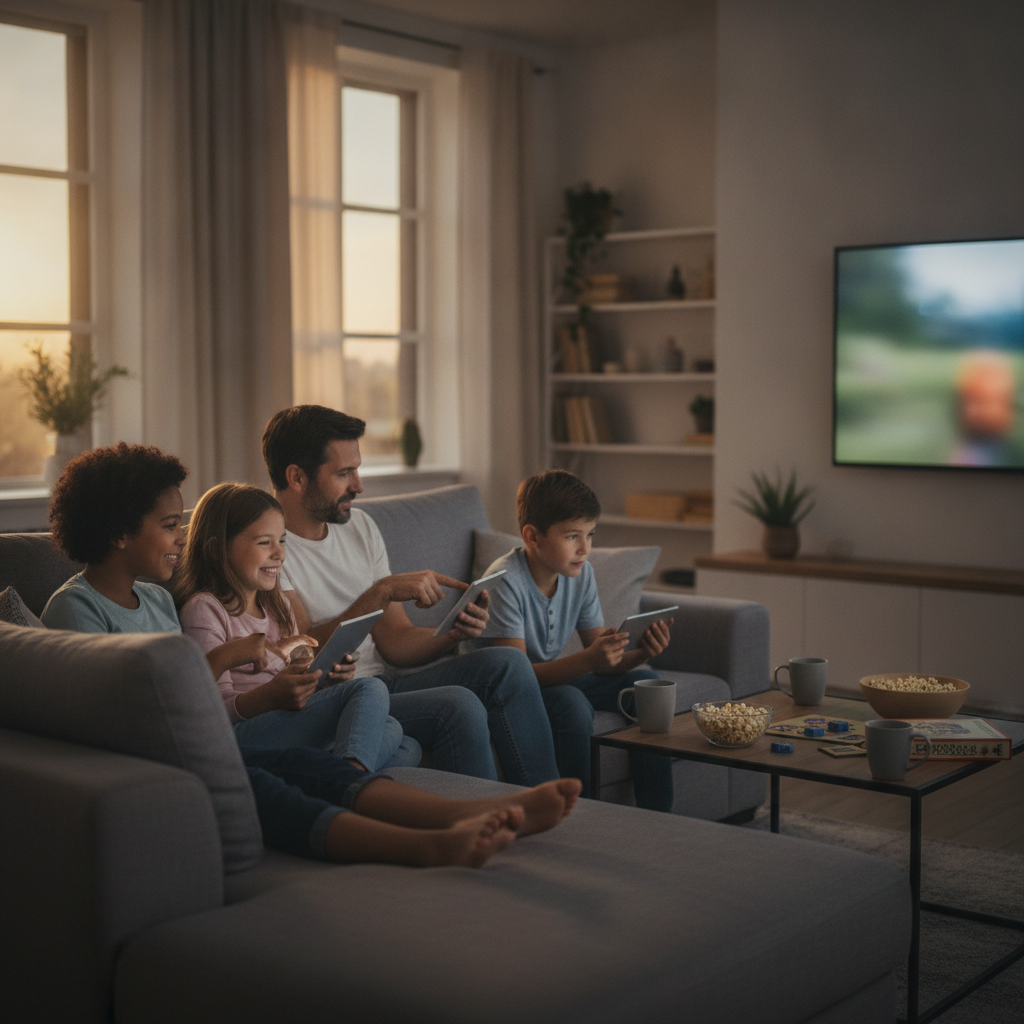
Collective watching has always been a negotiation. Two people settle onto a couch, remote in hand, and what follows is a familiar ritual of suggestions, vetoes, and eventual compromise — or one person simply giving up and letting the other choose. That ritual is shifting, quietly and without much fanfare, as second-screen companion apps begin to reshape the decision-making layer that sits just beneath the streaming experience itself.
What Are Second-Screen Companion Apps Exactly?
A second-screen companion app runs alongside a primary streaming service — think of it as a social layer sitting on top of platforms like Netflix, Max, or Apple TV+. Apps like Letterboxd, TasteDive, and Rave occupy this space, letting viewers rate content, track what they've seen, and — increasingly — sync preferences across multiple household members. The term *second screen* originally referred to using a phone while watching TV, but companion apps have evolved the concept into something more deliberate: a tool designed to enhance or inform the viewing experience rather than simply distract from it.
How Do These Apps Influence Group Decisions?
The most immediate change companion apps introduce is the externalization of preference. Rather than one person lobbying for a genre and another halfheartedly agreeing, both parties can log ratings, build watchlists, and let an algorithm surface options that actually overlap. Rave, for instance, allows groups to create shared queues and watch synchronously from different devices, which turns the decision into a collaborative process rather than a power dynamic. What's subtle here is the psychological shift — when a recommendation comes from an app rather than a partner, it removes the social friction of feeling like one person is always controlling the remote.
Why Shared Taste Profiles Are Becoming Household Norms
Streaming services have long used individual profiles to personalize recommendations, but the logic was always siloed — your profile, your algorithm. Companion apps have started bridging that gap by building *taste graphs*, a term from recommendation theory that maps not just what someone watches but how enthusiastically they responded to it. When two taste graphs overlap, the resulting recommendations carry more weight than anything a single person would choose independently. Households that use these tools regularly tend to report less time spent in the browsing loop — that particular kind of decision fatigue that comes from scrolling past hundreds of titles without ever landing on one.
What the Browsing Loop Actually Costs a Household
The browsing loop is its own cultural phenomenon at this point. Studies in behavioral economics have long identified that too many choices produce paralysis rather than satisfaction, and streaming libraries — now numbering in the tens of thousands of titles on major platforms — are a near-perfect laboratory for this effect. Companion apps address this by narrowing the field before anyone opens the main app. When a shared watchlist already contains fifteen pre-approved titles, the evening decision collapses from an open-ended search into a much smaller menu. That reduction in cognitive load is small but cumulative — households that structure their viewing this way tend to spend more time actually watching and less time negotiating.
How Social Features Are Redefining Viewing as Community
Letterboxd began as a film diary platform, but its social features have turned it into something closer to a taste community. Users follow friends and critics, leave reviews, and build lists that others can borrow. For households with eclectic tastes — one partner drawn to arthouse cinema, the other to genre films — following shared lists built by trusted curators becomes a neutral third party in the selection process. This is *cultural curation by proxy*, where a trusted external voice helps resolve internal differences without either person feeling overruled. The platform's influence has grown enough that film distributors now monitor Letterboxd trends as a gauge of audience appetite.
Where the Technology Is Heading Next
The next generation of companion apps is moving toward real-time mood matching — systems that factor in not just taste history but context. Time of day, how long someone has been watching that week, even ambient data from smart home devices may eventually feed into recommendations that feel less like algorithm outputs and more like genuine suggestions from something that knows you well. Apple's ecosystem integrations and the growing API openness of platforms like Plex suggest that the wall between companion apps and the streaming platforms themselves will continue to erode. When that integration becomes seamless, the second screen may effectively disappear into the primary one.
What This Means for How You Watch Together
If your household hasn't experimented with a companion app, the entry point is low. Start with Letterboxd for film-focused households, or Rave if synchronous watching across devices matters to you. Build a shared watchlist with even five or six titles and notice how differently the evening begins — with a starting point rather than a blank scroll. The technology isn't asking anyone to change how they watch; it's offering a small structural shift in how the decision gets made. And in a house where that decision has historically caused more friction than the watching itself, that shift turns out to matter quite a bit.
The living room negotiation isn't going away, but it's gaining better tools. As companion apps grow more sophisticated and more embedded into daily streaming habits, the quiet influence they exert over collective taste will only deepen — turning what was once a minor domestic friction point into something that feels, eventually, almost effortless.