Most people treat home organization like a once-a-year event — a big, exhausting weekend where everything gets upended, decisions get rushed, and half the bins end up back in the closet six months later. That pattern feels productive in the moment, but it rarely holds.
Seasonal decluttering tied to room function works differently. Instead of asking you to overhaul everything at once, it works with how each space in your home actually gets used across the year. The kitchen operates differently in summer than in winter. Your entryway shifts between coat storage and sunscreen catch-all depending on the season. When your decluttering effort mirrors those natural rhythms, the results stick.
Start With the Rooms That Change With the Seasons
Not every room in your home needs the same attention at the same time of year. The entryway, kitchen, and living room tend to shift function most dramatically between seasons, which makes them the smartest starting points for a rhythm-based approach. In early spring, your entryway transitions from a hub of heavy outerwear to a lighter zone for everyday bags and shoes. That natural shift creates an obvious trigger for a quick sort — pulling out what's no longer needed and making space for what's coming next. You don't have to manufacture urgency because the season does it for you.
Use Apps to Track What You Own Before You Purge
Let Digital Tools Do the Heavy Lifting
One of the reasons annual purges fail is that people overestimate how much they actually know about what they own. When you're staring at a closet full of stuff in March, it's hard to remember what you used last fall and what's been gathering dust for three years. Apps like Sortly, which lets you photograph and categorize items by room or storage location, give you a running visual inventory without requiring a full audit every time. Habitica is a different kind of tool — it gamifies your habits so that seasonal declutter tasks become part of a routine rather than a dramatic event.
For clothing specifically, Stylebook lets you log what you actually wear across the seasons, which takes the guesswork out of deciding what to let go. When you can see that you haven't touched a jacket since two winters ago, the decision becomes a lot easier.
Align Each Room's Declutter Window to Its Peak Usage Cycle
The bedroom closet makes most sense to sort in early fall and early spring, right before the transition into heavier or lighter clothing. The garage or storage area is best tackled in late winter, before garden season begins and the space gets crowded with tools you forgot you already had. The kitchen is worth a seasonal look in early summer, when pantry items left over from holiday baking start to expire and counter space suddenly matters more for entertaining.
This timing-based approach means you're never trying to declutter a space when it's at peak demand. You're always working slightly ahead of the season, which makes the decisions feel lower-stakes and gives you time to replace or donate before you actually need the room to function well.
Focus Each Session on Function, Not Just Volume
Ask What the Room Needs to Do Next
The whole-home purge model tends to focus on getting rid of stuff — the goal is to reduce volume, full stop. The room-function model shifts the question. Instead of asking "do I still want this?" you're asking "does this serve what this room needs to do in the next three months?" That reframe is subtle but powerful. A slow cooker might not be something you want to donate, but if it's taking up prime counter space in a kitchen that needs to stay clear for summer cooking, storing it seasonally makes more sense than keeping it out or giving it away.
This function-first thinking also prevents the overcorrection that comes with big annual purges, where people donate things they later wish they'd kept and end up buying replacements.
Build a Simple Rotation System Instead of a Storage Free-for-All
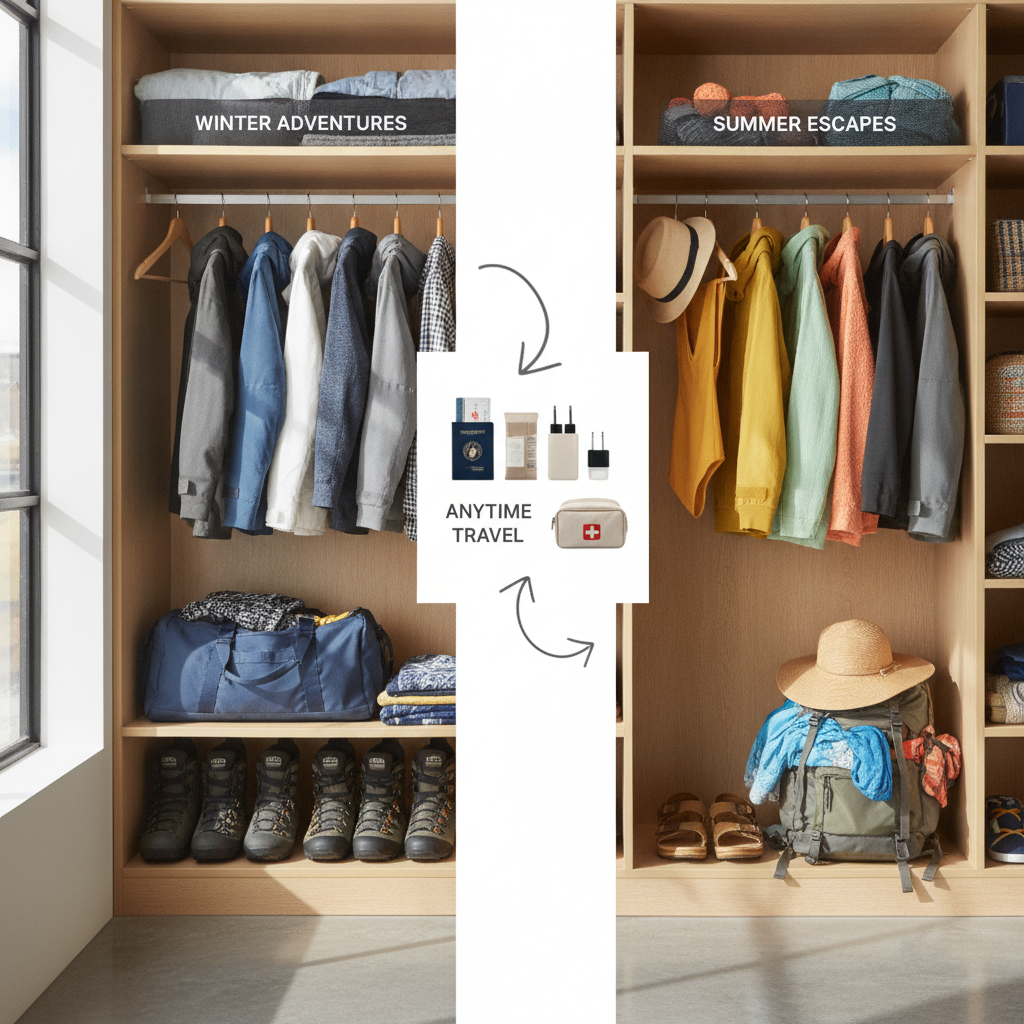
Seasonal decluttering works best when it's paired with a light rotation system — a way of moving items in and out of active use without losing track of them. Clear bins labeled by season and stored in a single consistent location make the swap fast enough that it actually happens. The Container Store and IKEA both offer modular bin systems that work well for this, and neither requires a major investment to get started. The goal isn't a perfectly curated home — it's a system that makes the next seasonal swap easier than the last one.
Over time, this rhythm builds genuine organizational habits rather than one-time cleanouts. You start to notice what you actually use, what's just taking up space, and what the room genuinely needs to function well.
The Way People Organize at Home Is Slowly Shifting
The broader trend moving through home organization right now is away from grand resets and toward smaller, consistent maintenance. Room-function decluttering fits naturally into that shift. As more households experiment with seasonal rhythms tied to how their spaces actually work, the appeal of the exhausting annual purge continues to fade. If you've been circling back to the same cluttered closet every January without lasting results, the rhythm-based approach is worth mapping out before the next season turns. Starting small — with just one room and one clear seasonal window — is enough to build from.