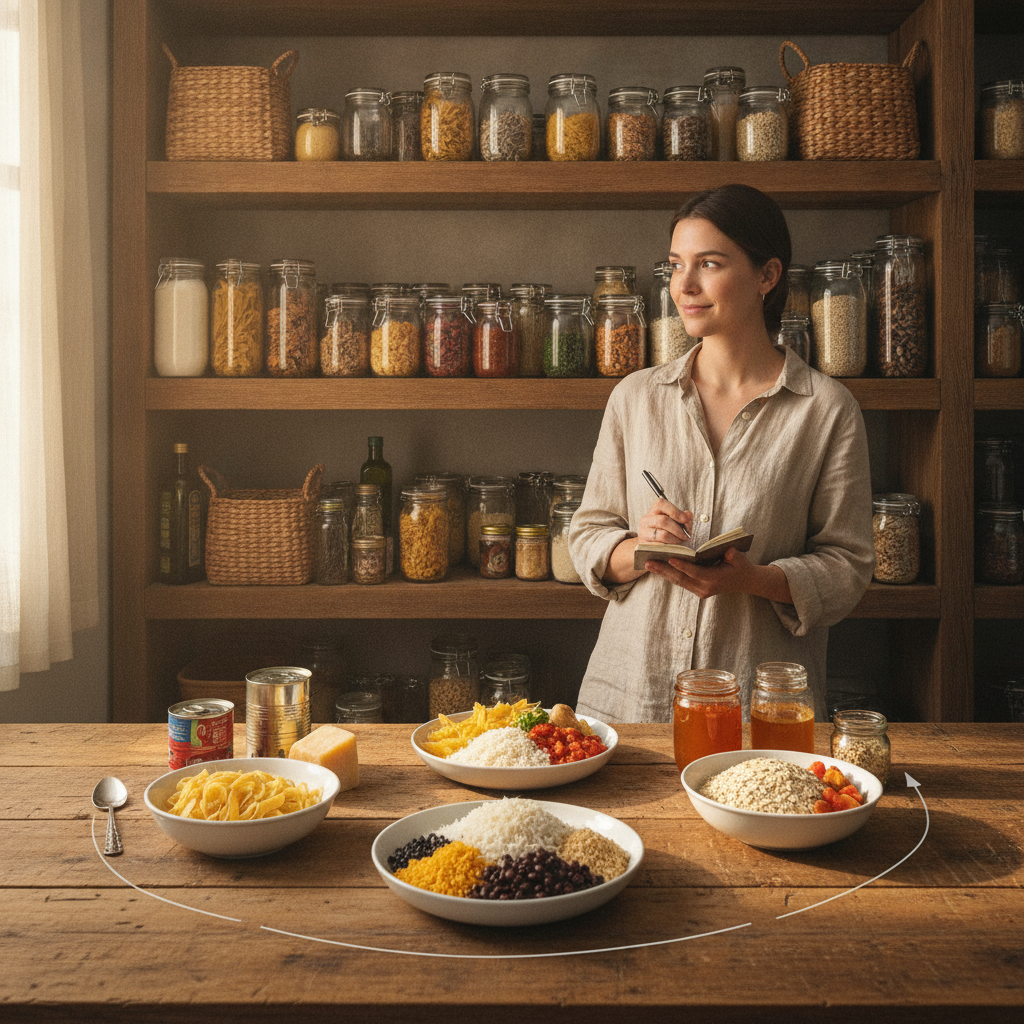
Standing in front of an open refrigerator at 6 p.m., unsure what to cook, is one of the most quietly exhausting moments in a busy week. It's not a lack of food — it's a lack of structure. A rotating three-meal framework built around pantry staples solves this without turning dinner into a military operation. The idea is simple: instead of planning every meal from scratch each week, you build a loose rotation of reliable meal types that your pantry is always ready to support.
Why Does Pantry-First Cooking Actually Work?
Most grocery indecision doesn't start at the store — it starts at home, when you realize you have ingredients but no clear plan for them. Pantry-first cooking flips the process. You shop to replenish what you already use, rather than buying ingredients for meals you may never get around to making. Brands like Bob's Red Mill, Muir Glen, and Rancho Gordo have built their followings partly because home cooks discovered that a well-stocked pantry of grains, canned tomatoes, and dried beans eliminates the need for daily inspiration. When your shelves are predictably stocked, dinner becomes an assembly exercise rather than a creative crisis.
How Do You Build the Three-Meal Rotation?
The framework works by identifying three broad meal types that fit your lifestyle — something like a grain bowl, a one-pot soup or stew, and a protein-plus-vegetable plate. These aren't rigid recipes; they're flexible templates. A grain bowl one week might use farro and roasted chickpeas; the next week it's rice and black beans with whatever vegetables are in the crisper. You rotate through these three templates across the week, mixing and matching components based on what's available. This keeps things varied enough to feel fresh without requiring you to plan from zero every Sunday.
What Should Your Pantry Actually Contain?
A functional rotating pantry doesn't need to be enormous. Focus on a core set of categories: a few whole grains like rice, quinoa, or barley; canned proteins such as chickpeas, lentils, or tuna; jarred or canned tomatoes for building sauces and braises; a couple of cooking oils; and a solid spice collection that covers at least two or three regional flavor profiles. Apps like Paprika can help you track what you have on hand and flag what needs restocking. The goal is to maintain a pantry that can support all three of your meal templates at any given moment, so shopping becomes a simple replenishment task rather than a full planning session.
How Does This Cut Down on Grocery Indecision?
Grocery indecision usually comes from trying to shop for specific recipes without a clear sense of what's already at home. The rotating framework changes your relationship with the store entirely. Because your pantry is always stocked with the core components, you're only shopping for fresh produce, occasional proteins, and restocking staples. The cognitive load drops significantly. You walk in knowing you need more canned tomatoes, a bag of lentils, and whatever vegetables look good that week — rather than consulting a five-recipe meal plan and hunting down seventeen specific ingredients across four aisles.
Why Is Flexibility the Point, Not the Flaw?
Rigid meal plans fail most people not because they're too ambitious, but because life disrupts them constantly. A work dinner, a friend stopping by, a night when you're too tired to cook anything involved — these moments collapse a strict plan almost immediately. The rotating framework bends instead of breaking. If you skip the grain bowl night, you just pick it up later in the week, or swap it for the soup template using the same pantry components. Nothing expires unused, and nothing forces you into a meal you're not in the mood for. The structure is there to reduce friction, not create it.
How Do You Keep the Rotation From Feeling Repetitive?
Variety within a framework comes from varying your flavor profiles, not your structure. One week, your one-pot meal might be a Moroccan-spiced lentil stew; the next, it's a simple Italian white bean and tomato braise. The template stays the same — one pot, pantry protein, aromatics, liquid — but the seasoning shifts entirely. Keeping a few international spice blends on hand, like za'atar, garam masala, or smoked paprika, gives you the ability to transform the same basic ingredients into something that feels genuinely different. Over time, you naturally develop a personal repertoire that makes the rotation feel abundant rather than monotonous.
How Should You Handle Weeks When Nothing Goes to Plan?
Some weeks will be genuinely chaotic, and the framework should accommodate that without guilt. Keep one or two ultra-simple fallback meals within your rotation — things like pasta with a jarred sauce upgraded with pantry beans, or scrambled eggs with whatever vegetables need using up. Trader Joe's, for instance, carries shelf-stable meals and high-quality pantry bases that slot perfectly into a flexible system without requiring any cooking skill on a low-energy night. The fallback meals aren't failures; they're part of the design. A framework that only works under ideal conditions isn't actually useful.
Building a rotating three-meal framework isn't about constraining what you eat — it's about removing the daily decision overhead that makes cooking feel harder than it is. When your pantry is stocked with purpose and your templates are flexible by design, grocery trips get shorter, food waste drops, and weeknight cooking becomes something you can actually look forward to rather than dread. The structure is light enough to adapt to real life while being just solid enough to give you something to come back to, week after week.