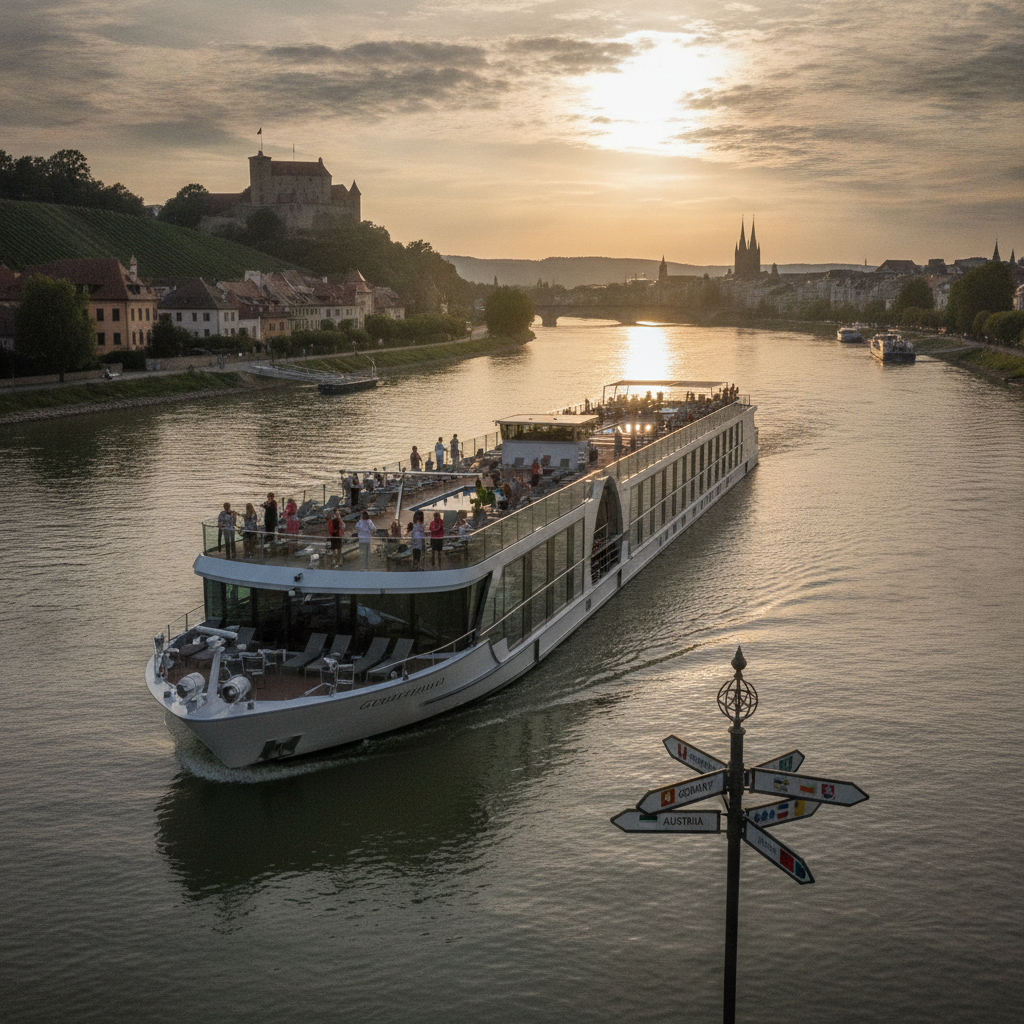
River cruising in Central Europe is one of the most efficient ways to move through multiple countries without dragging luggage between hotels every few days. A single cabin becomes your base for the entire journey, while the ship repositions overnight so you wake up somewhere new. The Danube alone passes through or borders ten countries, and popular cruise routes between cities like Vienna, Budapest, and Bratislava let you collect passports stamps without a single transfer. If you've ever felt exhausted by the logistics of multi-country travel, this format solves the core problem quietly and elegantly.
Choose Your River and Route Based on Priorities
The two dominant rivers for Central European cruising are the Danube and the Rhine, and they offer genuinely different experiences. The Danube runs east through Austria, Slovakia, Hungary, Serbia, and beyond — ideal if you want cities with deep history and architectural contrast. The Rhine trends toward medieval castle towns, wine villages, and the German-Swiss corridor. Cruise lines like Viking River Cruises and Avalon Waterways operate regularly scheduled departures on both rivers, with itineraries ranging from eight to fifteen days. Knowing which cultural flavors appeal to you before booking saves a lot of post-booking disappointment.
Read the Port Schedule Like a Travel Itinerary, Not a Cruise Brochure
Every river cruise publishes a detailed port schedule — the daily list of where the ship docks and for how long. This document is more useful than the marketing copy. Some ports are full days with afternoon departure; others are just a morning stop. Before you book, map those hours against what you actually want to do in each city. If you're determined to spend time at Budapest's Széchenyi Thermal Bath or walk the old town in Bratislava properly, confirm the ship stays long enough. Tight port windows can mean choosing between two things you came to see.
Factor in the Included Excursions Without Over-Relying on Them
Most river cruise packages include guided shore excursions at each port — typically a walking tour or a coach trip to a nearby highlight. These are genuinely useful for orientation, especially in cities you've never visited. However, they're designed for group pacing and tend to prioritize the most photographed landmarks. Once you've done the included tour, you often have free time remaining, and that's where independent exploration gets interesting. Checking the port schedule in advance lets you plan what you'll do on your own after the group returns to the ship, rather than wandering without a plan.
Use Overnight Sailing Segments to Recover and Reset
One underrated advantage of river cruising is the overnight sailing between cities. While you sleep, the ship moves — which means you're saving a night of accommodation cost, skipping an early-morning transit, and arriving refreshed rather than transit-worn. This is particularly noticeable on longer legs between, say, Passau in Germany and Vienna. Instead of arriving jet-lagged at a new hotel, you step off the ship into a new city with your morning coffee already done. Treating those sailing nights as genuine rest, rather than staying up late at the bar, makes the daily port rhythm sustainable across a long itinerary.
Keep a Light Daybag Ready Each Morning for Quick Disembarkation
The easiest operational habit you can build is preparing a small daybag the night before each port. River cruise ships dock close to city centers — often within walking distance of major squares and transit stops — so you're not navigating a shuttle situation like large ocean ships require. A bag with your camera, a city map or downloaded offline maps through an app like Maps.me, your travel documents, some local currency, and a light layer handles almost every situation. Leaving your main luggage untouched in the cabin while you explore on foot is one of the genuine pleasures of this travel format.
Plan for the Countries You'll Pass Through but Not Dock In
Some countries appear as scenery on river cruise routes without the ship actually stopping there. The Danube skims past corners of Croatia and Romania on certain extended itineraries, and depending on the route, you might transit through a country's waters without clearing customs. This is worth knowing in advance, especially if your goal is to say you've visited a particular place. If a country matters to you, confirm the ship actually docks and that you'll have passport control access — not just a view from the sun deck. Some longer itineraries do include Novi Sad in Serbia or Vukovar in Croatia as genuine stops.
Budget for Onboard Add-Ons That Aren't Included
River cruise pricing varies significantly by what's bundled. Some lines include beverages with meals; others charge for wine and beer separately. Shore excursions beyond the included ones — a private cooking class in Vienna or a vineyard tour in the Wachau Valley — carry additional costs. Gratuities for crew are sometimes included and sometimes expected separately. Before departure, request a clear breakdown of what's covered versus what's à la carte. Knowing this in advance helps you allocate your spending budget accurately, rather than being surprised mid-trip by a bill that's larger than expected.
Time Your Booking Around Shoulder Season for Better Value
Central European river cruises are most popular in summer, when the riverbanks are green, the temperatures are warm, and every port town is fully open. But spring departures in April and May, or autumn departures in September and October, offer noticeably lower fares, thinner crowds at ports, and a different visual texture — autumn foliage along the Rhine and Danube is genuinely stunning. Shoulder season also tends to mean more attentive service onboard because the ships are less full. Booking four to six months ahead for shoulder-season departures usually captures the best combination of price and availability.
River cruising in Central Europe continues to grow as a format, with cruise lines expanding their itineraries eastward toward the Black Sea and adding more premium small-ship options for travelers who want a quieter experience. The logistical simplicity of the format — one home base, multiple countries, no repeated check-ins — makes it an increasingly practical choice as travelers prioritize ease alongside exploration. The infrastructure is well-established, the routes are reliable, and the countries you'll move through are among the most historically rich in the world.