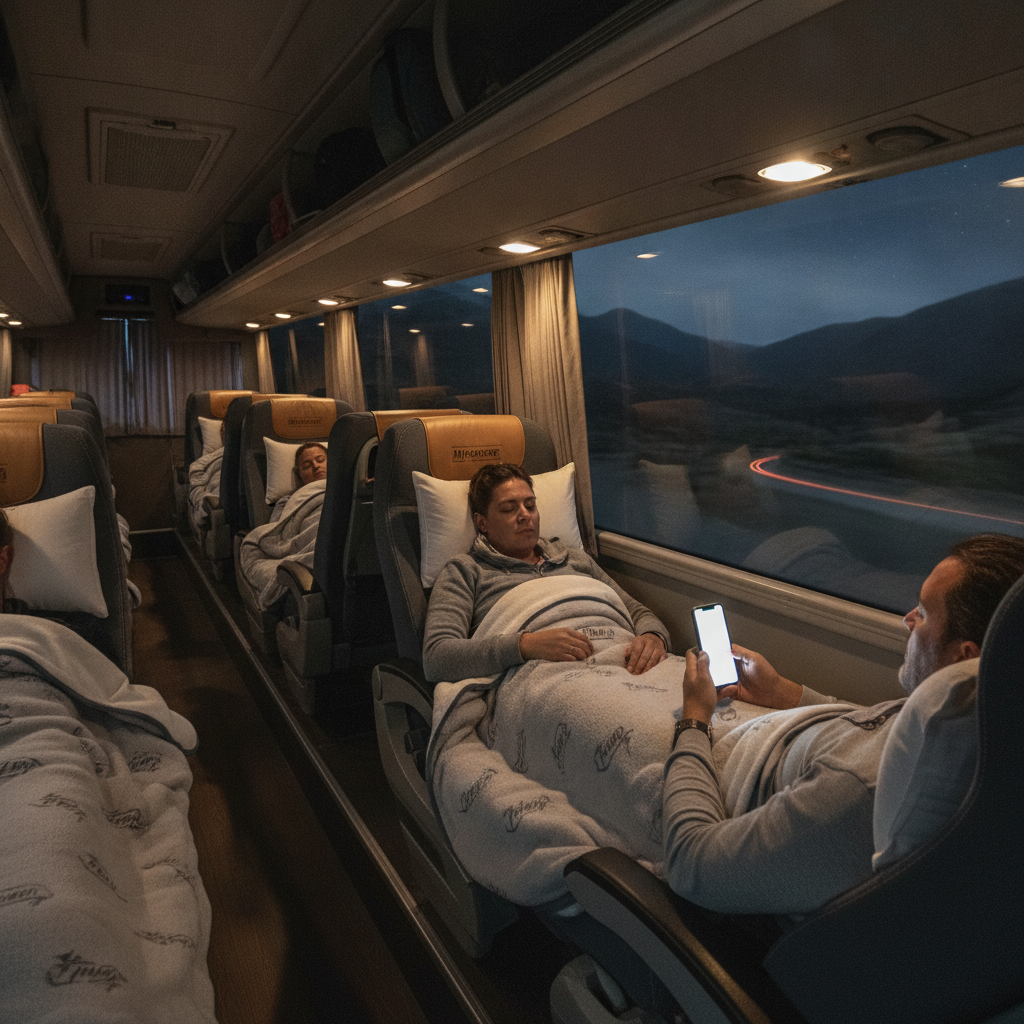
Long-distance travel in South America moves at a different rhythm than most other regions in the world. Instead of budget airlines or dense rail systems, the continent runs on an extensive web of overnight buses — comfortable, affordable, and designed to swallow the hours between cities while you sleep. For travelers who know how to use them, these routes effectively combine transportation and accommodation into a single ticket, stretching a travel budget further than almost any other method available.
The Logic Behind Sleeping on a Bus
The core appeal of overnight buses isn't just saving money — it's reclaiming time. A journey from Buenos Aires to Mendoza, or from Lima to Cusco, can run eight to twelve hours or more. If you travel during the day, you pay for transport and still need somewhere to sleep that night. Take the overnight option, and you wake up in your destination, having covered both ground and rest simultaneously. The math is simple, but the lifestyle shift it creates for your itinerary is significant. You move faster between cities without sacrificing recovery time.
Choosing the Right Seat Class
Most South American long-haul bus companies offer tiered seating that ranges from standard reclining seats to semi-cama (roughly 160-degree recline) and full cama or suite configurations that approach near-horizontal positions. For overnight routes, cama or suite class is almost always worth the extra cost. The price difference between economy and a full-flat seat is usually modest compared to the cost of even a budget hostel, and the quality of sleep you get directly affects how you feel during your first day in a new city. On routes operated by companies like Tur Bus in Chile or Cruz del Sur along the Peruvian and Chilean corridors, the premium tiers include meals, blankets, and sometimes entertainment — making the value proposition genuinely strong.
Booking Platforms and Finding Routes
Booking in advance is the most reliable way to secure a good seat, especially on popular routes during South American summer months or around major holidays. The platform Busbud aggregates routes across the continent and lets you compare operators, departure times, and seat classes from a single interface, which is useful when you're not yet familiar with which local companies serve a specific corridor. Recorrido.cl is particularly strong for Chilean routes, while Redbus operates across Colombia, Peru, and several neighboring countries with a well-functioning app for mobile bookings. For Argentina, the national platform Plataforma 10 covers the widest range of domestic operators and tends to have the most complete inventory of routes between cities like Córdoba, Rosario, and Bariloche.
Timing Your Departures for Maximum Comfort
Not all overnight departures are created equal. A bus leaving at 7 p.m. versus 11 p.m. produces a very different arrival experience — the earlier one may land you in a new city before dawn, leaving you to wait at a terminal for hours until accommodation check-in opens. Aiming for departures between 9 p.m. and midnight generally produces arrivals in the early morning hours of 6 to 9 a.m., which aligns much better with hostel and hotel reception schedules. In South American summer, which runs roughly from November through March, demand on key tourist routes increases noticeably. Booking at least three to five days ahead during this window is a reasonable habit to build into your planning rhythm.
What to Pack for the Journey
The comfort gap between a good overnight bus experience and a miserable one often comes down to a few small items. A neck pillow and a light sleep mask do more work than almost anything else in your day bag. Temperature management matters too — overnight buses in the Andes and southern cone regions tend to blast air conditioning regardless of outside conditions, so keeping a lightweight fleece or a thin jacket accessible rather than buried in your main luggage saves real discomfort. Earplugs or noise-canceling headphones help manage the ambient sound of the road and fellow passengers. Keeping snacks and a full water bottle within reach also reduces the need to rely entirely on roadside rest stops, which can be infrequent on longer rural stretches.
Safety and Terminal Awareness
Overnight bus travel across South America is well-established and broadly safe, but terminal awareness matters. Arriving into a major city's bus terminal before sunrise puts you in a public space during off-peak hours, and keeping your main bag stored in the overhead compartment or luggage hold — rather than left unattended in the aisle — is standard common sense. Most reputable terminals in cities like Bogotá, Santiago, and Lima are staffed around the clock and have regulated taxi or rideshare pickup zones. Using the Uber or InDriver app to arrange a ride rather than approaching informal drivers outside the terminal is a simple way to avoid the pricing ambiguity that often targets newly arrived travelers.
Stringing Routes Into a Longer Itinerary
The most efficient approach is to treat overnight buses as the connective tissue of a multi-city route rather than isolated one-off journeys. A traveler moving through the western spine of South America — say, from Medellín through Ecuador, Peru, and into Bolivia — can string together a series of overnight legs that cover thousands of kilometers while keeping accommodation nights to a minimum. Rest days in destination cities let you recover properly before the next journey, and the money saved on hotels compounds quickly over a trip of two weeks or more. Planning these legs in sequence, with one or two buffer days built in for delays or spontaneous extension, gives you the flexibility to enjoy each stop without feeling rushed toward the next departure.
Overnight buses in South America represent one of the most practical ways to stretch a travel budget without compromising the quality of the journey itself. When you choose the right seat class, book through reliable platforms like Busbud or Redbus, and time your departures thoughtfully, you transform what might otherwise feel like lost travel hours into productive rest. The continent's bus network is vast, well-developed, and genuinely traveler-friendly — and for those willing to use it intentionally, it opens up a style of travel where moving between major cities feels both affordable and surprisingly comfortable. Start mapping your route, pick your first overnight leg, and let the road work for you while you sleep.