There's a version of national park travel that most people never get to experience — not because it's hidden or particularly difficult to access, but simply because the majority of visitors show up at the same time, for the same reasons, following the same well-worn calendar. Summer is when families load up minivans, when trailheads fill before sunrise, when the parking situation at Yosemite Valley or the South Rim of the Grand Canyon becomes something closer to a logistics problem than a vacation. But spring, particularly during wildflower bloom season, rewrites the entire premise of what a national park visit can feel like.
The Wildflower Window and Why Timing Is Everything
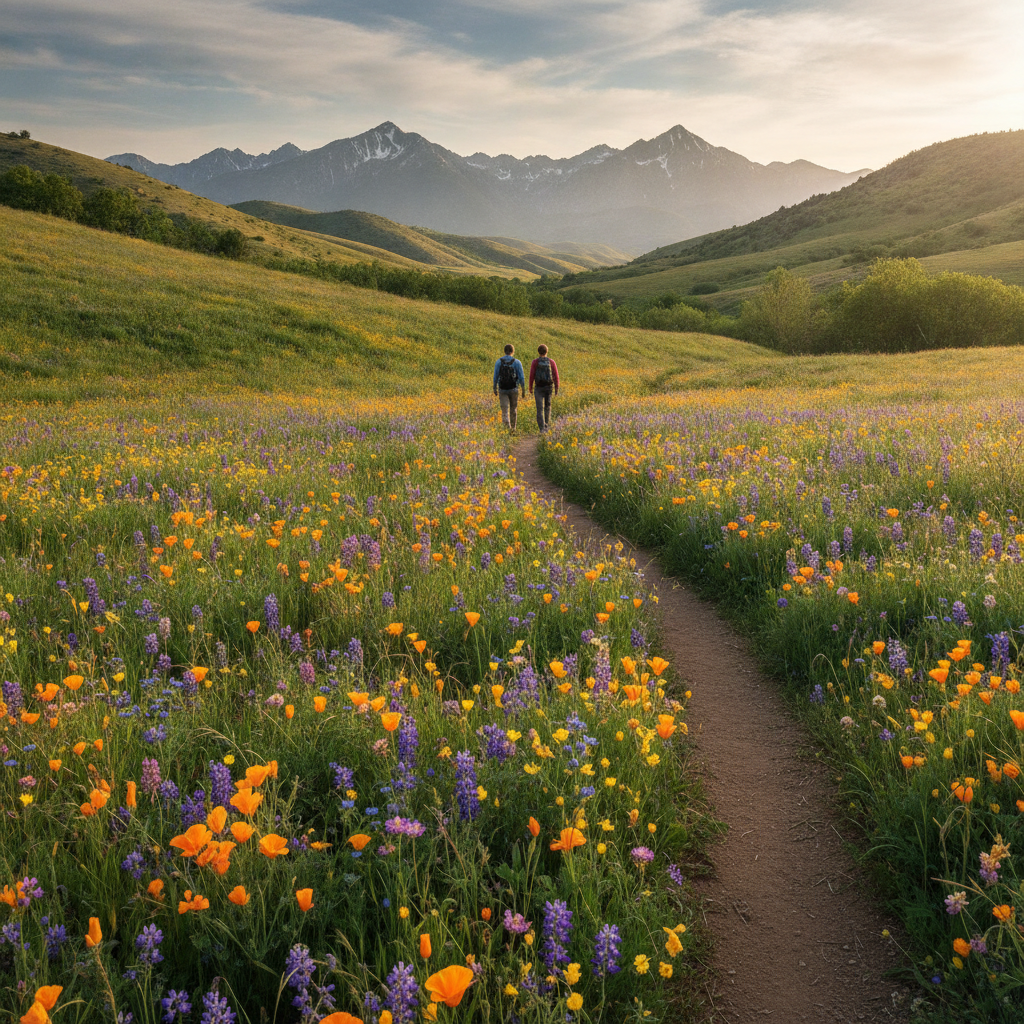
Spring bloom season in national parks isn't a single date on a calendar — it's a moving target that shifts based on elevation, rainfall, and winter snowpack, and chasing it correctly is half the art. In the Mojave Desert and areas surrounding Joshua Tree National Park, peak bloom can arrive as early as late February, while higher-elevation parks like Rocky Mountain or Crater Lake might not see their meadows fully open until late May or even early June. Understanding this variability is essential, because arriving even a week too early or too late can mean the difference between walking through a hillside covered in lupine and poppies versus a landscape that looks almost identical to what you'd see in September. Apps like iNaturalist are particularly useful here — they aggregate real-time observation data from citizen naturalists across the country, making it possible to track exactly where blooms are peaking at any given moment rather than relying on estimates that were written months in advance.
The practical advantage of visiting during wildflower season extends well beyond the visual spectacle itself. Spring brings softer light that photographers covet, cooler temperatures that make long hikes considerably more comfortable, and a kind of atmospheric clarity that summer's haze often obscures. Wildlife activity also tends to be more visible in spring, as animals are more actively moving after winter and before the midday heat of summer pushes them into shade. The combination of natural richness and physical comfort creates a quality of experience that simply doesn't have a direct equivalent during the busier months.
Crowd Levels, Logistics, and the Freedom of Off-Peak Timing
Anyone who has tried to secure a timed entry permit for Arches National Park on a Tuesday in July, or who has watched a campsite reservation at Zion disappear within seconds of becoming available, understands the particular frustration of trying to access wild places on peak-season terms. Spring genuinely changes this calculus. While popular parks like Great Smoky Mountains and Shenandoah do see increased spring visitation around school spring breaks, the window outside those two or three weekends offers a noticeably different situation — shorter waits, more available accommodation, and the ability to actually linger on a trail without feeling the social pressure of a queue forming behind you.
For trip planning logistics, this matters enormously. Booking accommodations in gateway towns — places like Springdale, Utah outside Zion, or Moab near Arches — becomes far more straightforward when you're not competing with the full summer market. Prices at local lodges and independent inns tend to reflect the quieter season as well, without necessarily dropping so far that service quality suffers. The Recreation.gov platform, which manages reservations for federally managed parks and campgrounds across the country, is still essential for spring planning, but competition for permits and campsites is meaningfully less intense than what visitors encounter from late June through August. Building a two-week itinerary around a cluster of parks in a single region becomes a more fluid, enjoyable process when the logistical ceiling lifts.
What Spring Changes About the Experience Itself
Beyond crowd counts and logistics, spring wildflower season changes something more fundamental about how a park visit actually feels. Trails that in summer function almost like pedestrian highways — with regular foot traffic, audible conversation at every bend, and the faint background noise of civilization — feel genuinely remote in spring. There's space to stop, to sit on a rock without anyone approaching for several minutes, to hear wind and birdsong without competition. This kind of quiet is what most people are theoretically seeking when they visit a national park, but it's something summer rarely delivers in the most visited destinations.
The bloom itself also creates a kind of engagement that summer scenery, however dramatic, doesn't always produce. Wildflowers operate on an intimate scale — they reward slowing down, crouching low, noticing what's immediately underfoot rather than scanning the horizon for the obvious landmark. This shift in attention tends to deepen how connected visitors feel to a place. Apps like Seek, developed by the same team behind iNaturalist, make species identification accessible to anyone with a phone camera, turning a casual afternoon walk into something that feels more like genuine discovery. Planning around a bloom event rather than simply a destination also gives an itinerary a kind of narrative structure — there's a reason to be in a specific place at a specific time, which makes even the logistical parts of a trip feel purposeful.
For families with flexible schedules, remote workers who can shape their own travel calendar, or any traveler who has visited a major park in August and left feeling vaguely disappointed by the crowds, spring offers a genuine recalibration. The parks themselves haven't changed. The landscapes are as dramatic as advertised. What spring changes is the relationship between the visitor and the place — the sense of having arrived somewhere wild rather than somewhere popular. That distinction turns out to matter more than most people anticipate until they've experienced it firsthand. The traveler who plans a May trip to see the desert in bloom, or who times a visit to Shenandoah's meadows around the emergence of trillium and wild azalea, tends to come back from that trip talking less about the views and more about the feeling — which is, in the end, exactly what a great national park experience should leave behind.