A single national park annual pass can pay for itself after just two or three visits — but most road trippers don't realize how much further it stretches when used with intention. If you're planning a multi-park loop and trying to keep costs manageable, the pass system in the United States offers far more flexibility than a simple gate admission swap. The key is understanding which passes cover which parks, how to time your purchases, and how to stack savings across a longer itinerary.
Calculate Your Break-Even Point Before Buying
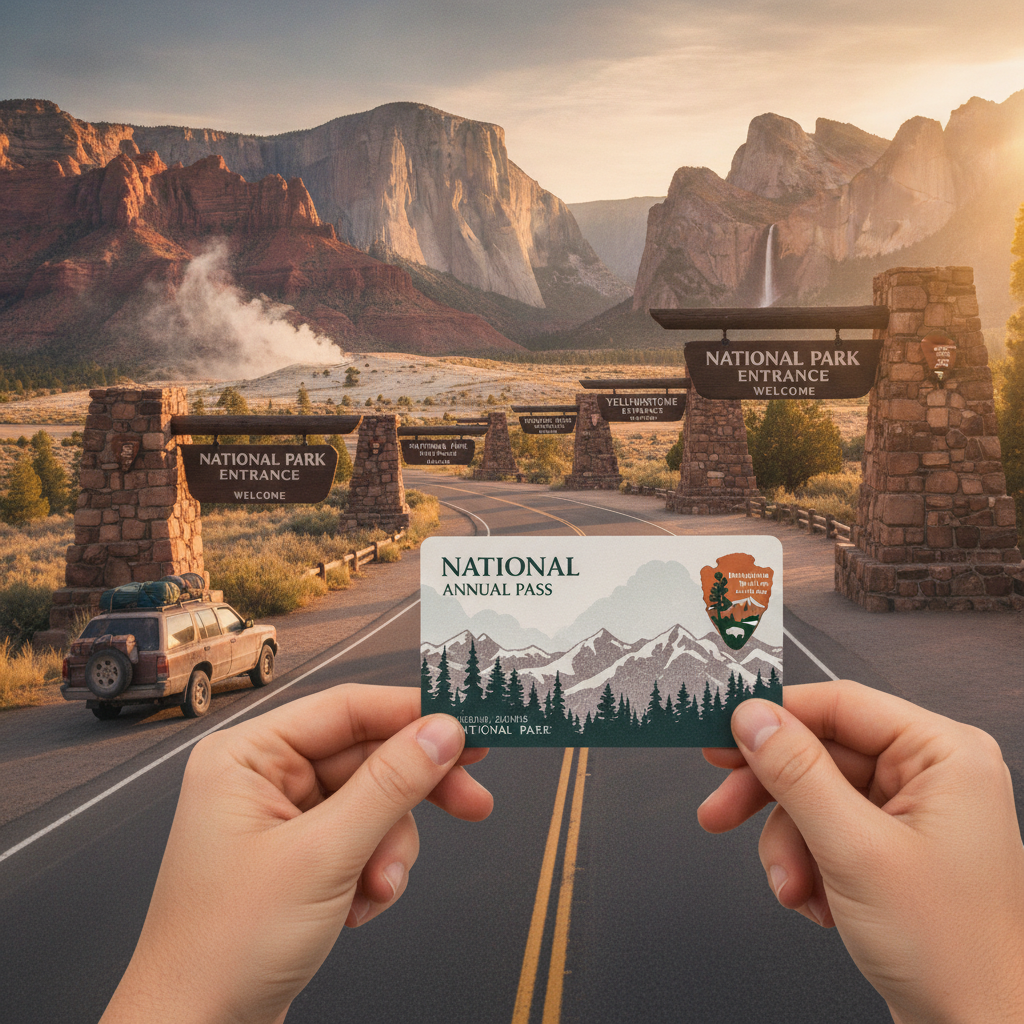
The America the Beautiful Pass costs a flat annual fee and covers entrance to over 2,000 federal recreation sites, including all National Park Service units. Before purchasing, map out every park on your itinerary and add up what individual entry fees would cost. Most parks charge per vehicle, and fees at popular destinations like Grand Canyon, Zion, or Yellowstone add up faster than expected. If your total exceeds the pass price — which typically happens after two or three major parks — the pass is already paying off. Doing this math upfront takes five minutes and tells you immediately whether the investment makes sense.
Time Your Purchase Around Your First Entry
The America the Beautiful Pass is valid for 12 months from the date of purchase, not from a calendar year. That distinction matters more than most people realize. If you buy the pass a week before your trip starts, you get a full year of coverage from that point forward — which means it could cover a future trip as well. Buying it at the gate of your first park rather than weeks in advance maximizes how much of that 12-month window falls during active travel. This is especially useful if you plan more than one road trip within the same year.
Know Which Sites Are Actually Covered
Not every federal land falls under the America the Beautiful umbrella. The pass covers National Park Service sites, Bureau of Land Management areas, U.S. Fish and Wildlife refuges, and most U.S. Forest Service locations — but it doesn't cover all state parks or concession-operated facilities within federal lands. Before assuming a site is included, check the Recreation.gov listings or the NPS fee schedule. Slot canyons near Page, Arizona, for example, are on Navajo Nation land and require separate permits regardless of what pass you hold. Knowing the boundaries prevents frustrating surprises at the entrance.
Stack the Pass With Free Entrance Days
The National Park Service designates several free entrance days each year — typically around Martin Luther King Jr. Day, the first day of National Park Week, and a few other nationally observed dates. If your road trip itinerary has any flexibility, shifting a day or two to align with these windows means you can save the pass for parks you visit outside those dates. It sounds like a small optimization, but on a two-week trip with multiple stops, this kind of scheduling keeps your overall spending lower without sacrificing anything on the experience side.
Use the Pass for Day-Use Fees, Not Just Entry
Many travelers don't realize the America the Beautiful Pass waives day-use fees at recreation areas beyond park entrances. Boat launches, swimming areas, and visitor parking at certain sites all qualify. At places like Lake Mead National Recreation Area or Flaming Gorge, those day-use charges can rival a standard entry fee. Scanning the fee schedule for each stop on your route reveals these secondary savings. Over a two-week trip with varied outdoor activities, this can add up to meaningful savings that wouldn't appear on a rough entry-fee estimate.
Account for the Senior and Access Pass Variations
If anyone in your group qualifies for the Senior Pass (available to U.S. citizens aged 62 and older) or the Access Pass (for permanent disabilities), those passes offer the same coverage as the standard annual pass — often at a significantly reduced one-time fee. The Senior Pass is available as a lifetime pass or an annual version, and either option covers the same federal sites. For a household road-tripping together, one qualifying pass covers the entire vehicle at per-vehicle fee sites. It's worth checking eligibility before defaulting to the standard annual pass.
Plan Entry Around Timed-Entry Reservation Windows
Several high-traffic parks — including Glacier, Rocky Mountain, and Arches — have implemented timed-entry reservation systems that operate separately from the annual pass. Holding an America the Beautiful Pass gets you past the fee booth, but it doesn't guarantee access during peak hours without a reservation. These reservations open weeks in advance on Recreation.gov and fill quickly. Building your park sequence around these windows rather than forcing a flexible itinerary around them prevents the frustrating situation of arriving at a park only to be turned away despite having paid for annual access.
Extend the Pass Value Into Surrounding Recreation Areas
The most underused strategy is treating the pass as a gateway to the broader public land network surrounding the marquee parks. Spending a full day at Zion National Park is obvious — but the adjacent Dixie National Forest and BLM land around Kanab, Utah, also fall under the pass umbrella and offer comparable scenery with far fewer crowds. Building a few of these secondary stops into your route stretches the per-day value of the pass while often delivering quieter, more memorable experiences. This approach also reduces the pressure of trying to cram everything into the most visited sites.
Used thoughtfully, the America the Beautiful Pass does far more than cut entry costs — it opens up a layered system of federal recreation sites that most road trippers walk past in favor of headline destinations. Mapping your route around the pass rather than treating it as an afterthought is the difference between breaking even and genuinely transforming your travel budget across a multi-park trip.