Capital cities have a way of convincing travelers that they represent the country they've just entered. The wide boulevards, monumental architecture, and tourist-facing infrastructure all suggest a completeness — as if the whole of a culture has been gathered and placed within reach. Yet experienced budget travelers often return from a week in Lisbon or Warsaw or Chiang Mai with a growing suspicion that what they encountered was a version of daily life designed, at least in part, for their consumption rather than an honest reflection of how the population actually lives and spends.
The Economics of Being Overlooked
Market towns occupy a different position in the economic ecosystem of any country. Because they exist primarily to serve the local population — rather than an international visitor base — their pricing reflects what residents are actually willing and able to pay. Accommodation, food, transport, and services are calibrated to local incomes, which in most countries outside Western Europe and North America remain significantly more modest than what a capital-city cost structure implies. A traveler who moves from Zagreb to a smaller market town like Varaždin, or from Marrakech inward to Meknès, will almost immediately notice the adjustment in what things cost without any corresponding drop in quality or hospitality. The guesthouses still have clean rooms. The restaurants still cook from scratch. The difference is that neither place has had to inflate its prices to capture a high-turnover tourist market.
What a Weekly Market Actually Teaches
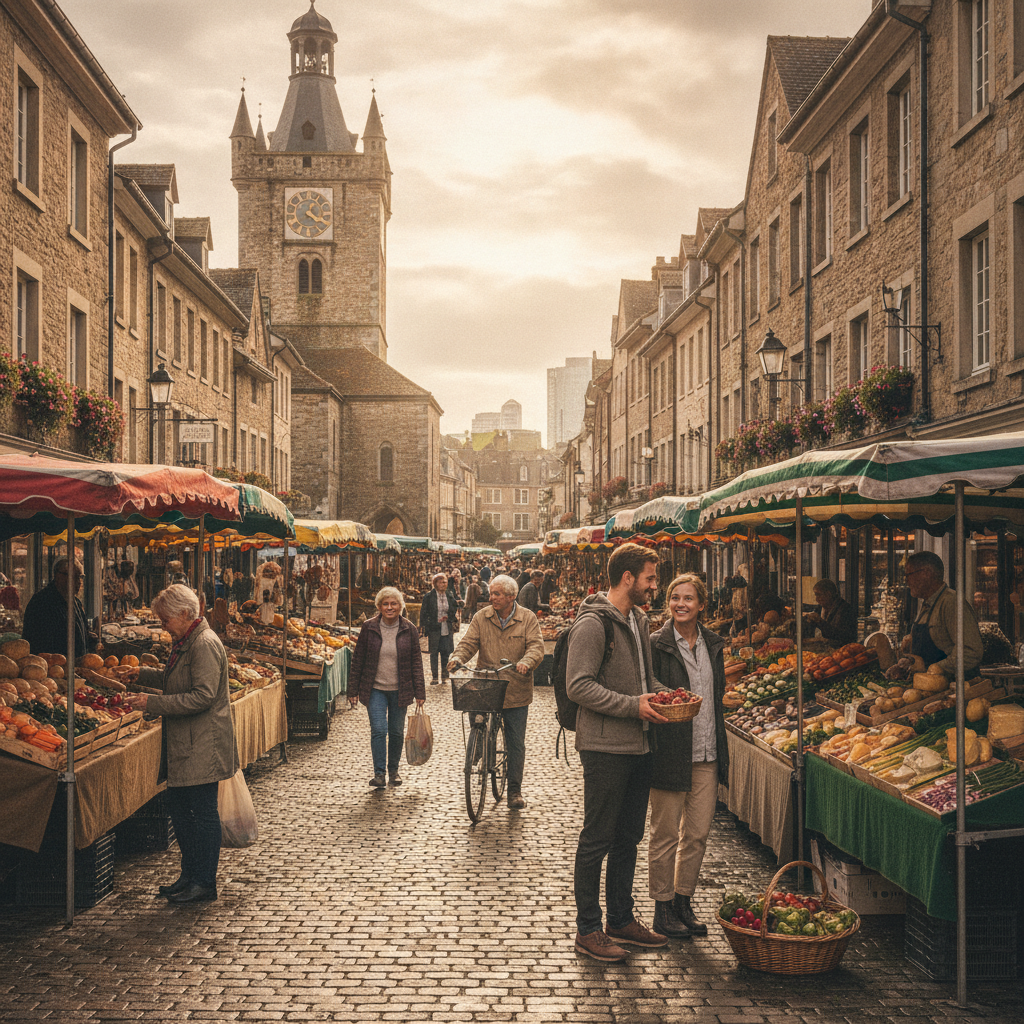
The *souk* in Arabic-speaking countries, the *mercado* across Latin America, the *pazar* throughout the Balkans and Turkey — these weekly or daily market gatherings are the economic and social heartbeat of market towns in a way that has no real equivalent in a capital city's curated food hall or artisan district. Watching how locals shop — what they buy, how they negotiate, which stalls they return to week after week — communicates more about household economics and cultural priorities than any museum exhibit could. Vendors at these markets are not performing authenticity for cameras. They are conducting the same transaction they conduct every Thursday, and a traveler who takes the time to move slowly through that environment absorbs something genuinely useful: a sense of what life actually costs and what it actually values. The rhythm is unhurried because it has no reason to be otherwise.
Lower Costs Without the Trade-Off
The assumption embedded in budget travel advice is usually that spending less means accepting less. Cheaper accommodation means a noisier street or a shared bathroom. Cheaper food means less interesting cooking. Market towns consistently challenge this assumption because their lower prices reflect structural economics rather than reduced standards. A family-run *pensione* in a Tuscan hill town outside Florence, or a small guesthouse in Battambang rather than Phnom Penh, often delivers more attentive hospitality simply because the owner depends on returning visitors and word-of-mouth in ways that a capital-city hostel chain never will. The cooking at a local restaurant in a market town tends to reflect regional ingredients and inherited recipes rather than an international menu engineered to offend no one. Travelers consistently report that the most memorable meals of a trip happened somewhere they almost didn't stop.
The Texture of Ordinary Days
Capital cities generate a particular kind of exhaustion in travelers — not just physical but perceptual. The density of things worth seeing, the competition for space in museums and restaurants, the noise of other tourists processing the same attractions, all of it creates a low-grade friction that accumulates over days. Market towns operate at a different register entirely. The morning belongs to the bakery queue and the school run. The afternoon slows. The evening gathers at whatever outdoor space the community has claimed as its own — a square, a riverside terrace, a café that has been in the same family for decades. For a traveler trying to understand how people actually organize their days, this ordinary texture is irreplaceable. It is not exotic. That is precisely the point.
Practical Decisions That Make It Work
If you're considering building a trip around market towns rather than capital cities, a few practical adjustments make the approach more effective. Regional rail — rather than intercity express services — connects smaller towns at a fraction of the cost and passes through landscapes that faster routes skip entirely. Local tourism offices, which in market towns often operate from a single room staffed by someone who was born there, tend to give more candid advice than the polished visitor centers of capital cities. Apps like Rome2rio are useful for mapping multi-stop routes between smaller towns when connections aren't obvious. Accommodation platforms that allow filtering by neighborhood type — rather than proximity to major landmarks — help identify guesthouses that sit within walking distance of the daily market rather than the tourist quarter. The goal is to arrive in a place that does not especially need you there, and to spend time in it anyway.