There is a particular kind of stillness that comes just before a market opens — the moment when vendors are arranging their goods, when the air carries the smell of something frying nearby, and when ordinary life has not yet made room for visitors. That stillness, and everything that follows it, contains more honest information about a place than most curated tourist experiences ever could. Museums preserve what a culture was. Markets reveal what it is.
What Markets Communicate That Monuments Cannot
The physical artifacts housed in museums and the well-worn explanatory panels beside monuments do important work — they contextualize history and anchor a nation's sense of identity in something permanent. But they are also, by nature, edited. Someone decided what belonged and what didn't. Weekly local markets operate under no such curation. In Oaxaca's Mercado de Abastos, the largest indigenous market in Mexico, stalls overflow with chili varieties that have no English names, medicinal plants sold by women who learned their uses from their grandmothers, and handwoven textiles priced for the neighbors who need them — not for tourists who want a keepsake. The market reflects actual demand, which is to say it reflects actual life. The priorities of a community become visible through what it chooses to sell, what it considers worth carrying across town before sunrise, and what it considers ordinary enough to leave unlabeled.
A culture's relationship to food alone carries enormous revelatory weight. In Japanese asa-ichi — morning markets held in towns like Wajima on the Noto Peninsula — the emphasis on seasonal, local produce and the quiet formality of the transactions between vendor and buyer communicates something about restraint, quality, and mutual respect that no amount of temple-visiting fully explains. The transaction is unhurried. The produce is impeccably arranged. The exchange of money happens with both hands. These are not performances for tourists; they are habits so ingrained they continue regardless of who is watching.
The Language Barrier as an Unexpected Advantage
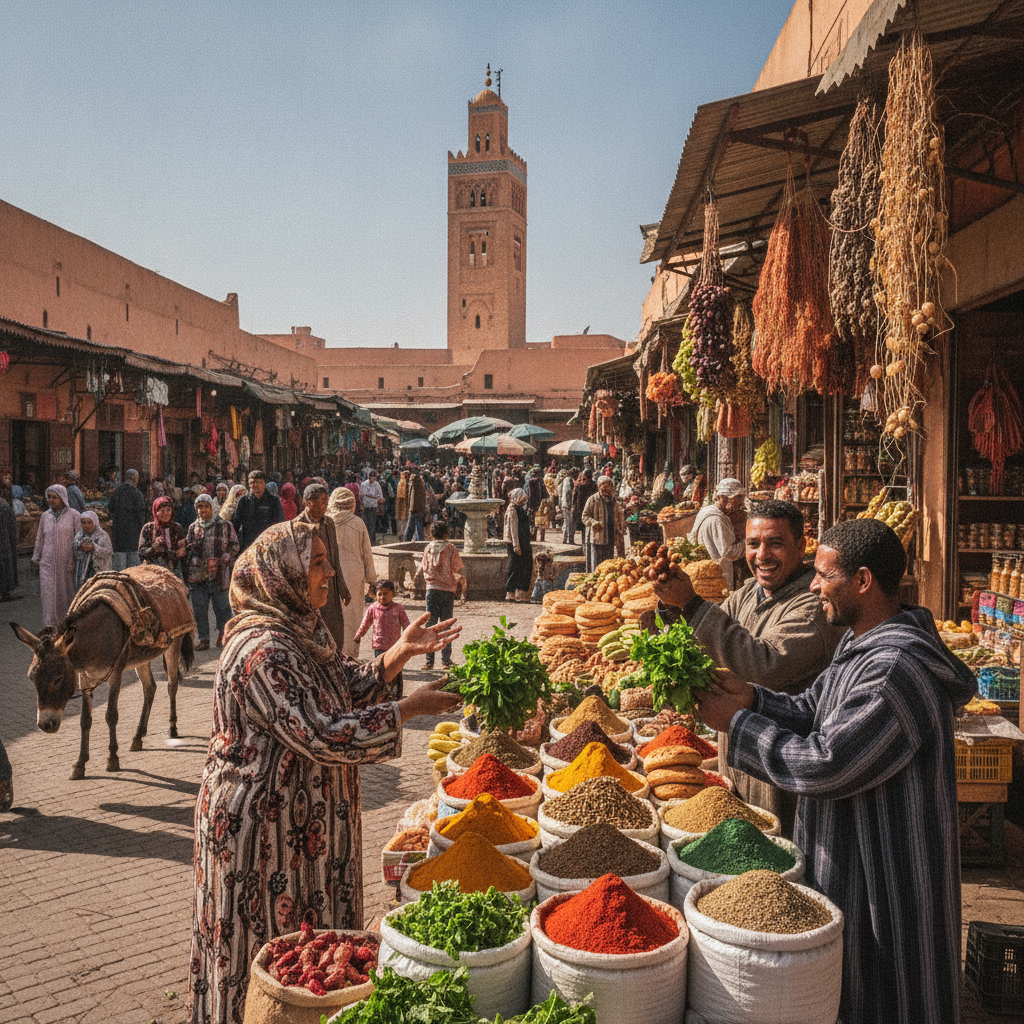
There is a common assumption that language barriers make travel more isolating, particularly in markets where negotiation and communication feel essential. In practice, the opposite is frequently true. When verbal shorthand isn't available, people default to gesture, expression, and demonstration — forms of communication that are often more direct and more revealing than polished English ever manages to be. A vendor in Marrakech's Mellah district who shows a first-time visitor how to test the freshness of olives by pressing gently at the edge is communicating something generational and instinctive. A farmer at a weekend souk in the Dordogne region of France who points insistently at a particular variety of walnut before anything else has been considered is making an argument for regional pride that no guidebook entry can fully translate.
Beyond the individual exchange, the ambient language of a market — the cadence of bargaining, the particular volume at which vendors call out, the way buyers greet each other across the stalls — gives a visitor an aural map of how social life functions. Markets in Southeast Asian cities like Chiang Mai tend toward cooperative noise, with sound layered freely and interactions overlapping without tension. Covered markets in Bologna, by contrast, hum with a more deliberate energy, each conversation treated as its own contained event. These are not generalizations imposed from outside; they are patterns that emerge naturally from sustained, unhurried observation.
Reading the Layout and Rhythms of Market Life
How a market is organized spatially says something about the values that govern it. In many West African markets, including those held in the outskirts of Accra, goods are grouped by the gender of the vendor as much as by the type of product — a practice that reflects economic structures and social roles built across generations. In European Christmas markets, the clustering of handcraft stalls away from food vendors signals a deliberate separation of sustenance from cultural expression, each given its own weight and audience. These arrangements are rarely arbitrary; they are the result of long negotiation between community needs, available space, and inherited custom.
The rhythm of the market matters as much as its layout. Most weekly markets abroad operate according to internal logic that visitors only grasp gradually. The best produce sells within the first hour. The warmest social exchanges happen in the middle period, when the pace slows and vendors have time to talk. By late morning, prices may shift and the social texture changes — regulars have already left, and the remaining energy belongs to a different category of shopper. Understanding these rhythms requires patience and presence. It requires, essentially, being there without agenda — which is precisely the condition under which genuine cultural observation becomes possible.
Making the Most of a Market Morning
If you approach a local market abroad the way you might approach a guided tour — with a checklist, a time limit, and specific things to photograph — you will leave with souvenirs and very little else. The more productive approach is to arrive early, move slowly, and spend the first thirty minutes simply watching before buying anything. Sit with a coffee if the market has a café at its edge. Notice who greets whom, where the longest queues form, and what people carry away in the largest quantities. Apps like Google Translate's camera function have made it possible to read handwritten price signs and ingredient lists in real time, which helps independent exploration without requiring a guide. Many markets, including the famous Naschmarkt in Vienna and the Boqueria in Barcelona, have suffered from tourist saturation at their most central points — the better strategy is to walk toward the quieter perimeter stalls, where vendors are more likely to be selling to locals and more likely to have time for an unhurried exchange.
There is something quietly profound about spending a morning in a place where you are not the intended audience. Where the transactions around you are practical and unperformed, and where ordinary life continues at its own pace regardless of your presence. That experience — of being a genuine observer rather than a managed visitor — has a way of making everything else about a destination fall into clearer focus. It is the same stillness from just before the market opened, grown fuller now with understanding, carrying home not in a bag but in the way a place has rearranged itself in the mind.