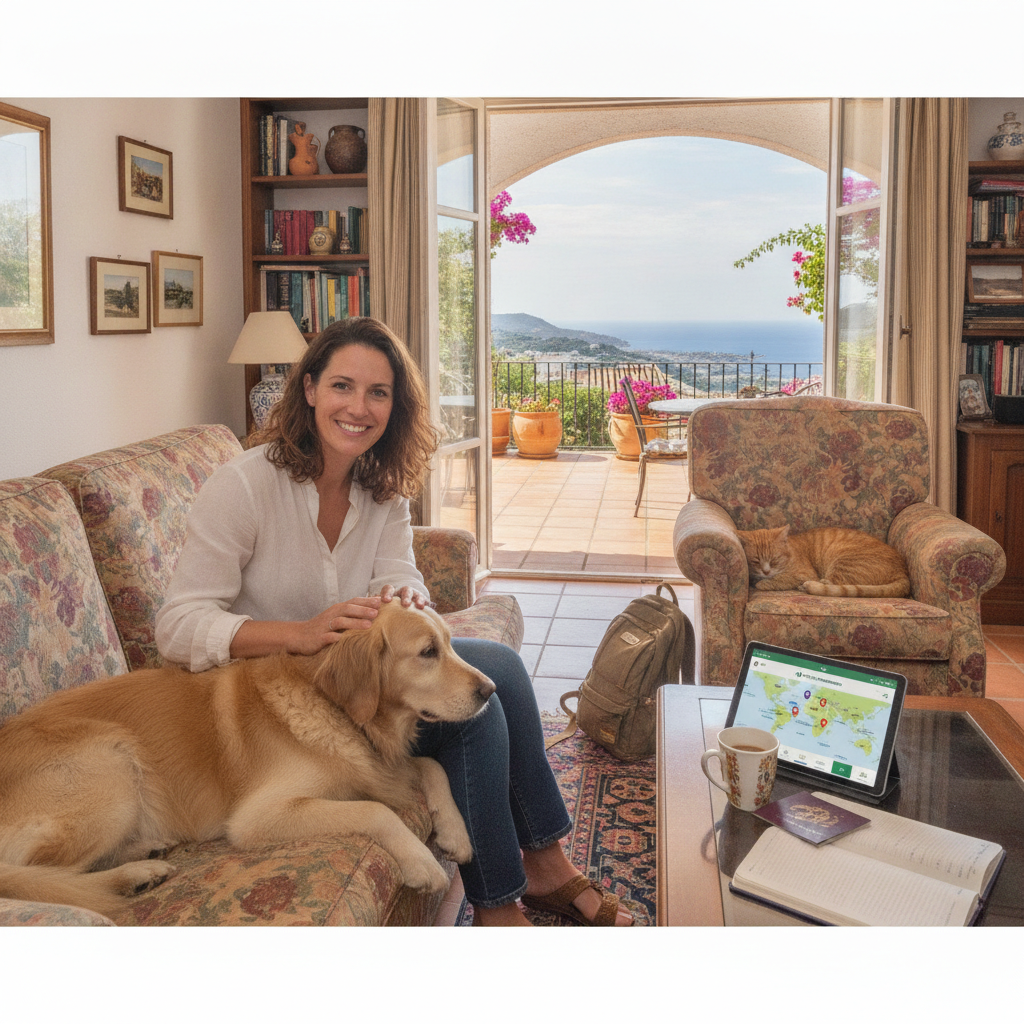
There's a particular kind of freedom that comes from waking up in a foreign city without the quiet anxiety of a hotel checkout clock ticking in the background. The bed is comfortable because it belongs to someone who chose it carefully. The kitchen has real spices in the cupboard. A dog is asleep at the foot of the bed, unbothered by the fact that you arrived only four days ago. This is house-sitting — not a fringe arrangement for the chronically nomadic, but a quietly thriving exchange economy that has reshaped the way a growing number of thoughtful travelers experience living abroad.
The Exchange at the Heart of It
House-sitting operates on a principle of mutual benefit that feels almost old-fashioned in its simplicity. A homeowner — often called the *host* in platform language — needs to travel, relocate temporarily, or simply wants their home and pets cared for while they're away. A sitter, in turn, wants somewhere meaningful to stay, without the compounding daily cost of hotels or short-term rentals. No money changes hands. What exists instead is a kind of stewardship arrangement, formalized through platforms that handle the vetting, communication, and reviews on both sides. The most established of these platforms include TrustedHousesitters, HouseCarers, and MindMyHouse — each with its own community culture and geographic strengths, though TrustedHousesitters has become the most widely recognized among long-term travelers for its global reach and volume of listings.
The sits themselves vary enormously. One listing might involve a pair of elderly cats in a Lisbon apartment with a view of the Alfama district. Another might place a sitter in a farmhouse in Provence with two dogs, a vegetable garden, and a well-stocked wine cellar. The consistency isn't in the setting — it's in the structure. Sitters arrive, they care for the animals, they treat the home with respect, and they leave. Hosts return to a home that's been lived in rather than left empty, and their pets have had companionship rather than the stress of a kennel.
What the Application Process Actually Looks Like
Getting started requires more than signing up and browsing. Platforms like TrustedHousesitters require both hosts and sitters to build verified profiles, complete with references, identity checks, and reviews from previous sits. For newcomers without a sitting history, this creates a familiar bootstrapping challenge — no reviews without sits, no sits without reviews. The practical solution most experienced sitters recommend is beginning with shorter, lower-competition listings: a weekend sit in a nearby city, or a midweek arrangement that other applicants might pass over. These early sits build the foundation of a profile that eventually opens doors to more desirable long-term arrangements in Bali, the Scottish Highlands, or coastal Portugal.
Applications themselves are closer to cover letters than booking requests. A strong application addresses the specific pets by name, demonstrates genuine animal experience, and gives the host a clear sense of who will be living in their home. Hosts receive multiple applications for popular listings and tend to choose sitters who feel like a natural fit — someone they'd be comfortable handing a key to, rather than simply the most geographically convenient candidate.
The Real Costs Hidden Inside a Free Arrangement
Calling house-sitting "free" requires a small asterisk. Platform membership fees exist — typically charged annually — and they represent a real, upfront investment before any sit is confirmed. Travel costs to reach the sit location, any visa requirements for the destination country, and personal expenses during the stay all remain entirely the sitter's responsibility. What house-sitting eliminates is accommodation cost, which in cities like Amsterdam, Copenhagen, or Sydney can represent the single largest line item in any travel budget. For travelers who stay for extended periods — two weeks to three months is common — the savings are substantial enough to transform the financial logic of long-term travel entirely.
There's also a less obvious cost that deserves acknowledgment: flexibility. Unlike conventional travel, house-sitting runs on the host's schedule, not the sitter's. A confirmed sit locks in dates, and backing out carries real reputational consequences on platforms where reviews are currency. Travelers who need absolute spontaneity tend to find the structure constraining. Those who enjoy settling into a place, learning its rhythms, and building something closer to a temporary local life tend to find the constraints irrelevant.
Living Like a Resident Rather Than a Tourist
There's a concept in slow travel circles sometimes called *enracinement* — a French word roughly meaning "taking root" — that captures something important about what extended house-sitting produces. When you stay in a furnished home for three weeks in Oaxaca or Porto, you shop at the same market twice. You learn which café opens earliest. You recognize the neighbor's dog. The city stops being a collection of attractions and starts becoming a place where ordinary life unfolds. This is categorically different from what even the best boutique hotel can offer, because a hotel is designed to hold you lightly. A home, even a borrowed one, holds you differently.
This shift in experience is why many seasoned house-sitters describe the practice less as a travel hack and more as a philosophical reorientation. The pets are part of that. Walking a dog through an unfamiliar neighborhood at seven in the morning, when the streets belong entirely to locals, produces an intimacy with a place that no guided tour ever quite reaches.
Finding Your First Sit
If you're considering trying this for yourself, the entry point is more accessible than it might appear. Start by creating a complete profile on TrustedHousesitters or HouseCarers before applying to anything. Upload clear photos, write honestly about your experience with animals, and gather two or three personal references from people who can speak to your reliability and care. Apply to listings that match your actual skill set — don't overstate experience with large dogs or livestock if you haven't handled them. Read each listing carefully and respond to its specific details rather than sending a generic message. Your first confirmed sit will feel like a threshold moment, and in a meaningful sense, it is — the beginning of a way of traveling that trades the anonymous efficiency of hotels for something considerably more alive.
The image that opens this reflection — a borrowed bed, a dog at the foot of it, a kitchen that smells faintly of someone else's cooking — isn't a fantasy. It's waiting on a platform listings page, posted by a host in Seville or Chiang Mai who simply needs someone trustworthy to show up, care for what matters, and stay awhile.