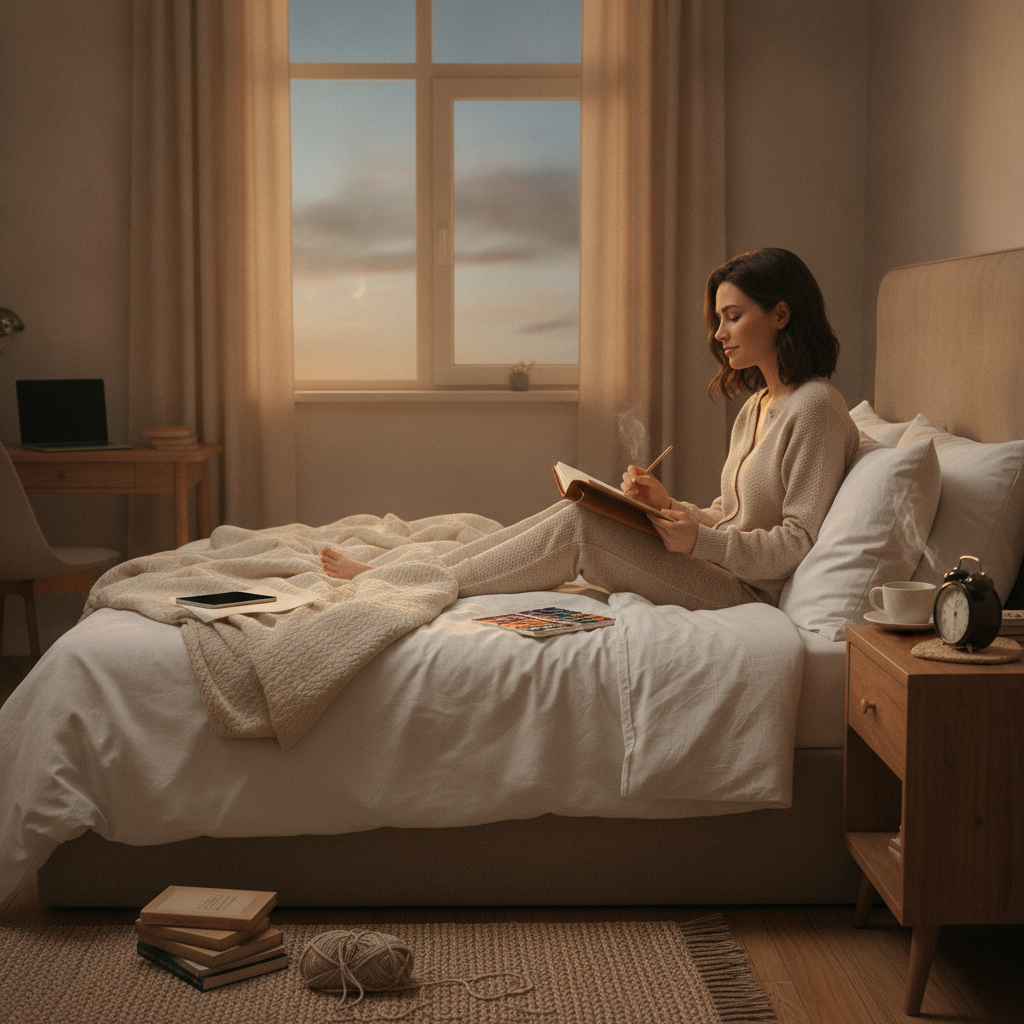
The relationship between how people spend their final waking hours and how they feel the following morning is far more direct than most daily routines acknowledge. Evening habits shape the quality of sleep architecture, the body's hormonal patterns, and the psychological transition from wakefulness to rest — all of which compound into the energy levels experienced at dawn. As screen-heavy evenings have become the cultural default, a growing number of people are discovering that replacing that time with analog hobbies produces a noticeably different kind of morning: clearer, calmer, and more purposefully energized.
How Screens Interfere With the Body's Wind-Down Signals
The human body begins preparing for sleep several hours before a person actually closes their eyes, orchestrating a gradual hormonal shift that depends heavily on environmental cues — particularly light. Blue light emitted by phones, tablets, and televisions interrupts the natural release of melatonin, effectively convincing the brain that daylight is still present. This delay doesn't just push sleep onset later; it compresses the early restorative cycles of sleep, which are responsible for physical recovery and emotional regulation. Even when total sleep duration appears adequate, screen-disrupted sleep tends to produce mornings defined by grogginess rather than genuine restoration.
The Neurological Case for Quiet, Tactile Evening Activities
Analog hobbies — drawing, knitting, reading physical books, assembling puzzles, playing a musical instrument — engage the brain in a qualitatively different way than passive screen consumption. These activities require low-stakes focus, drawing attention inward rather than outward toward reactive stimuli like notifications or algorithmic content. The nervous system responds to this kind of gentle engagement by downshifting from alert wakefulness toward the parasympathetic state that precedes quality sleep. Brands like Leuchtturm1917 have built entire product lines around journaling and hand-writing practices precisely because tactile creativity has a measurable calming effect that screens, by design, are not built to replicate.
What the Transition Period Actually Feels Like
For people who begin replacing screen time with analog activities in the evening, the first week or two often feels counterintuitive — the pull of a phone or streaming service like Netflix is habitual rather than deliberate, and the initial hours with a sketchpad or a paperback can feel slow by comparison. This friction is meaningful, though. The discomfort reflects the brain recalibrating to a lower stimulation threshold, which is precisely the adjustment that produces downstream sleep quality improvements. Most people who maintain the habit for two to three weeks report that mornings begin to feel distinctly different: waking feels less like an interruption and more like a natural emergence.
The Morning Energy Connection Explained
Morning energy is not purely a function of sleep quantity — it reflects sleep quality, hormonal rhythm, and the psychological state carried into waking. When the evening transition to sleep is smooth and unstimulated, the body completes more full sleep cycles and arrives at morning with cortisol levels that rise gradually and appropriately, providing a natural sense of readiness. Contrast this with screen-heavy evenings, which tend to produce fragmented sleep and cortisol patterns that feel blunted or dysregulated. The difference is perceptible: people who have shifted to analog evening routines consistently describe mornings as less effortful, even when total sleep hours remain unchanged.
Analog Hobbies That Translate Most Effectively Into Better Rest
Not all analog activities create equal wind-down conditions. The most effective evening hobbies tend to be low-physical-exertion, manually engaging, and personally satisfying without being competitive or goal-pressured. Watercolor painting, gentle needlework, reading fiction, assembling models, and hand-lettering are particularly well-suited. Moleskine notebooks have become a staple of the pre-sleep journaling practice for good reason — writing by hand slows cognitive processing in a way that typing does not. Listening to vinyl records, a tactile hobby in itself through the ritual of handling and cueing, offers another effective sensory replacement for screen consumption that combines aesthetic pleasure with genuine quiet.
Building the Shift Into an Existing Evening Without Overhauling Everything
The practical transition doesn't require a dramatic restructuring of an evening. Starting with a single hour — perhaps the last sixty minutes before bed — and designating that window as screen-free is typically enough to begin producing noticeable changes in sleep quality within two to three weeks. You don't need to abandon streaming or social media entirely; the goal is to create a consistent buffer between stimulating digital content and the moment sleep is intended to begin. Keeping analog materials visible and accessible — a book on the nightstand, a sketchbook on the coffee table, a set of knitting needles beside a reading chair — removes the friction that sends most people back to their phones by default. Small environmental design choices make the analog option the path of least resistance.
The broader observation holds: mornings are shaped by evenings more than most people account for in their daily planning. Shifting even a portion of screen time toward quieter, analog engagement isn't a rejection of modern convenience — it's a recognition that the body's sleep systems evolved long before algorithmic content did, and that they respond accordingly when given the right conditions. The change is subtle in practice and significant in effect, which makes it one of the more underestimated adjustments available to anyone looking to feel genuinely rested rather than merely technically unconscious for several hours each night.