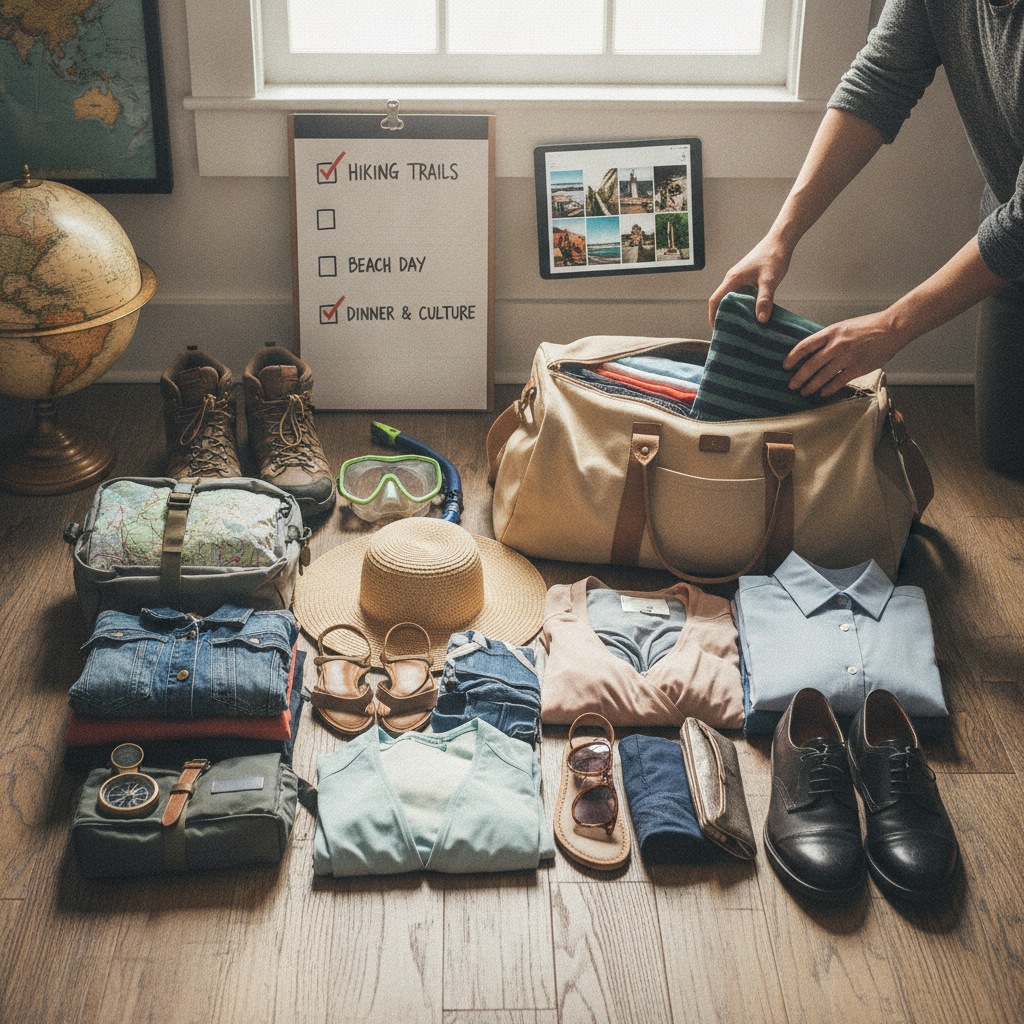
Overpacking is one of those travel problems that feels preventable every single time — and yet it happens again and again. You stand in front of a half-filled suitcase three nights before departure, and something shifts. You start adding items "just in case," and before long you're dragging a bag that weighs twice what you intended. The culprit usually isn't poor discipline. It's the wrong framework. Most travelers still pack based on how many days they'll be away, which tells you almost nothing about what you actually need.
Why Day Count Is the Wrong Starting Point
Counting days is a blunt instrument. A seven-day trip to Patagonia and a seven-day trip to Lisbon share nothing in common from a gear perspective, yet many people approach both with roughly the same packing logic. When you organize your checklist around days, you default to adding one of everything per day, and the bag fills fast. The real question isn't how long you'll be gone — it's what you'll actually be doing. A hiking trail, a museum afternoon, a beach day, and a dinner reservation each require a completely different subset of your wardrobe and gear. Building a checklist around those specific activities gives you a far more honest picture of what earns its place in the bag.
Mapping Activities Before You Open the Suitcase
The most effective approach is to spend fifteen minutes before you pack writing down every distinct activity type your trip involves. Not a day-by-day schedule, but a category list: hiking, swimming, city walking, formal dining, long transit days, or outdoor markets, for example. Once that list exists, you assign gear to each category rather than to each day. You'll quickly notice that many categories share items — a lightweight layer works for cold mornings on a hike and for air-conditioned museums. This overlap is where you find the real packing savings. You stop duplicating and start consolidating.
Building the Checklist Around the Destination's Logic
Every destination has its own physical and cultural logic that should shape the list directly. A beach-and-reef trip to the Philippines calls for reef-safe sunscreen, a rash guard, and sandals that handle both wet sand and cobblestones. A late-spring visit to the Scottish Highlands asks for waterproof layers, sturdy ankle boots, and almost no formal clothing. Apps like PackPoint or TripIt help bridge this gap by generating destination-aware packing suggestions based on weather forecasts and activity tags you set before the trip. Using these tools as a first draft — then trimming aggressively based on your actual activity list — gets you close to an ideal bag faster than starting from scratch.
Cutting the "Just in Case" Category Entirely
The single largest source of overpacking isn't forgotten essentials — it's the vague, anxiety-driven "just in case" category. You pack a blazer in case there's a nice restaurant. You add a second pair of shoes in case the first pair gets wet. You include a third book in case you finish the first two. Activity-based checklists eliminate this category almost automatically, because every item has to earn its place by connecting to a specific thing you've already confirmed you'll do. If formal dining isn't on your activity list, the blazer doesn't make the cut. This shift from defensive to intentional packing changes the weight of your bag significantly.
Using Templates That Travel With You
One of the most underused packing strategies is building a reusable template for each destination type and saving it somewhere accessible. Notion works well for this — you can create a packing database with templates tagged by trip type: beach, mountain, city, cultural immersion, or mixed. After each trip, you spend five minutes refining the template based on what you actually used versus what sat untouched in the bag. Over time, your templates become precise instruments built from real experience. Google Keep is simpler and faster for people who prefer a lightweight approach, with shareable lists that travel partners can access and contribute to in real time.
Timing the Final Pack for Maximum Clarity
When you pack matters almost as much as what you pack. Packing three or more days before departure gives you genuine time to reassess. You can lay everything out, identify redundancies, and remove items without the pressure of a morning flight looming. Packing the night before, by contrast, tends to trigger anxiety-driven additions. Your activity-based list should be finalized at least four days out, with the physical packing happening two to three days before you leave. That window gives you space to notice what's missing, source anything you've forgotten, and resist the impulse to add things that don't belong.
Trusting the Destination to Fill Gaps
A quiet but liberating truth about modern travel is that almost every destination can supply what you forgot. Pharmacies, outdoor gear shops, supermarkets, and local markets exist in nearly every city and most small towns worldwide. Trusting that reality gives you permission to pack less. If your activity-based list doesn't include an item and you're unsure whether you'll need it, leave it out. The worst-case scenario is usually a quick stop at a local shop — which often turns into a worthwhile experience in itself. Packing with confidence in the destination means arriving lighter, moving more freely, and spending less of your trip managing a bag that's become a burden.
Starting with your next trip's activity list rather than a calendar is a small shift that changes everything about how the bag comes together. Give yourself the time to build that list thoughtfully, trust what it tells you, and let the checklist do the work your instincts usually overcomplicate.