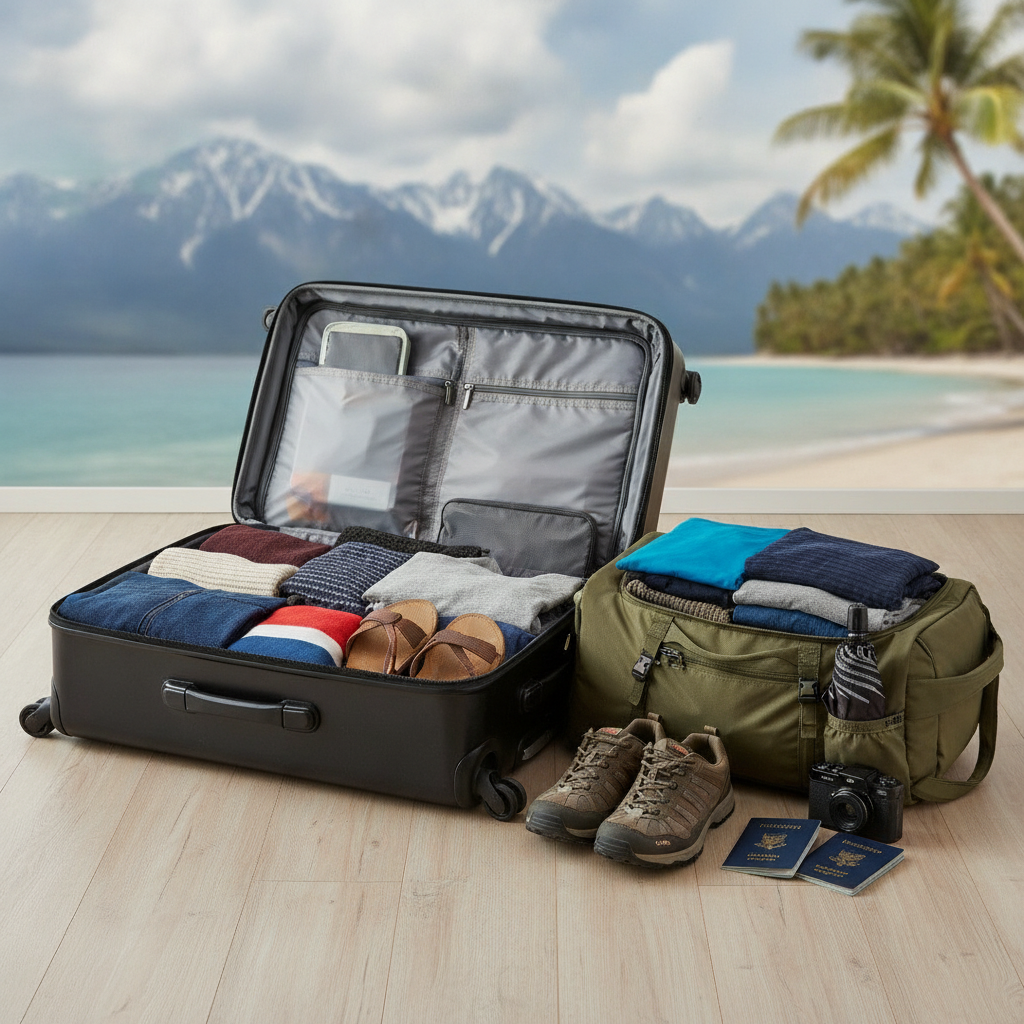
Two weeks of travel across varying climates sounds like a checked-bag situation — until you've spent forty minutes waiting at baggage claim while your connection window quietly evaporates. Carry-on only travel is entirely achievable for longer trips, even when you're moving between beach destinations and mountain towns. The trick isn't packing less. It's packing smarter, with a system built around flexibility rather than volume.
Choose a Bag That Works for Every Airline
Your bag is the foundation of the whole system, so it's worth getting right. The Osprey Farpoint 40 and the Away Carry-On are popular for good reason — both fit within most international carry-on size limits while offering enough interior volume for a two-week trip. Look for a bag with a clamshell opening rather than a top-loading design, since it makes packing and unpacking at hotels significantly easier. A dedicated laptop sleeve and one or two exterior pockets keep essentials accessible without digging through everything you own at security.
Build Around a Three-Color Clothing Palette
The fastest way to overpack is to treat every outfit as a standalone unit. Instead, build your clothing around three neutral colors — something like navy, grey, and white — so every piece mixes and matches naturally. A shirt that works with two different bottoms effectively doubles your outfit count without adding weight. Aim for roughly five to six tops, three bottoms, and one versatile layer that carries across the whole trip. This approach cuts the mental overhead of packing dramatically and prevents the classic mistake of bringing things you never actually wear.
Layer Strategically Instead of Packing Bulky Outerwear
A heavy winter jacket is the single biggest space-waster in any carry-on. For trips that swing between warm and cold climates, the layering system is your best tool. A lightweight merino wool base layer, a mid-layer fleece like those from Uniqlo, and a packable wind-resistant shell can handle surprisingly cold temperatures when worn together. In warm destinations, those same layers separate into functional standalone pieces. The shell compresses small enough to stuff into its own pocket, and the merino base layer doubles as sleepwear, cutting one extra item from the list.
Use Packing Cubes to Create Zones, Not Just Compression
Packing cubes earn their reputation, but most people use them purely for compression rather than organization. Assign each cube a purpose — one for tops, one for bottoms, one for layers — so you always know exactly where to reach without unpacking everything at once. Brands like Eagle Creek make cubes in a range of sizes that stack efficiently inside most carry-ons. The bigger win is at your destination: you can pull out just the cube you need and leave the rest packed, which speeds up the daily routine considerably on shorter overnight stays.
Pick Shoes That Do Double Duty
Shoes take up more space than anything else in a bag, and most travelers bring too many pairs. For a mixed-climate two-week trip, three pairs is a realistic ceiling: one comfortable walking shoe that looks presentable enough for a casual dinner, one sandal or lightweight shoe for warm destinations, and one pair of compact packable flats or slip-ons as a backup. Allbirds and Rothy's both make shoes that are lightweight, packable, and look reasonable across casual and semi-dressy settings. Wear the bulkiest pair on travel days so they never take up bag space.
Handle Toiletries With the Decanting Mindset
Full-size bottles are unnecessary for any trip, but even travel-sized versions of everything add up fast. The decanting mindset means you bring small refillable containers — sold in multi-packs from brands like Cadence — and fill them with only what you'll realistically use. Most hotels and guesthouses provide shampoo and body wash, so you only need to carry what you know won't be available locally. A solid shampoo bar eliminates liquid restrictions entirely and lasts through the full two weeks without weighing anything notable. Keep your toiletry kit to one slim pouch that fits flat in an outer pocket.
Plan One Laundry Session Into the Middle of the Trip
The real secret to two-week carry-on travel isn't bringing more — it's accepting that you'll wash clothes once along the way. Most cities have laundromats, and many hotels offer laundry service or self-service machines. Planning one mid-trip wash around day seven or eight means you only need a week's worth of clothes rather than two, which cuts your clothing load nearly in half. Merino wool items air-dry quickly and resist odor long enough that you can stretch wear between washes. Knowing laundry is part of the plan removes the anxiety of running short.
Keep Your Personal Item as a Functional Day Bag
Most airlines allow a personal item alongside a carry-on, and that second bag is worth treating as an active part of your system rather than overflow storage. A compact daypack or structured tote does double duty: it holds your in-flight essentials during travel, then becomes your daily exploration bag at the destination. The Peak Design 20L Everyday Backpack is a reliable choice because it collapses flat enough to slide under a seat while still functioning as a solid day bag on the ground. Keep this bag consistent across every trip so loading it becomes automatic.
Building a carry-on system takes one or two practice runs to feel natural, but once it clicks, longer trips with less luggage start to feel genuinely freeing rather than restrictive. Start with the bag and the color palette — get those two things right, and the rest tends to fall into place on its own.