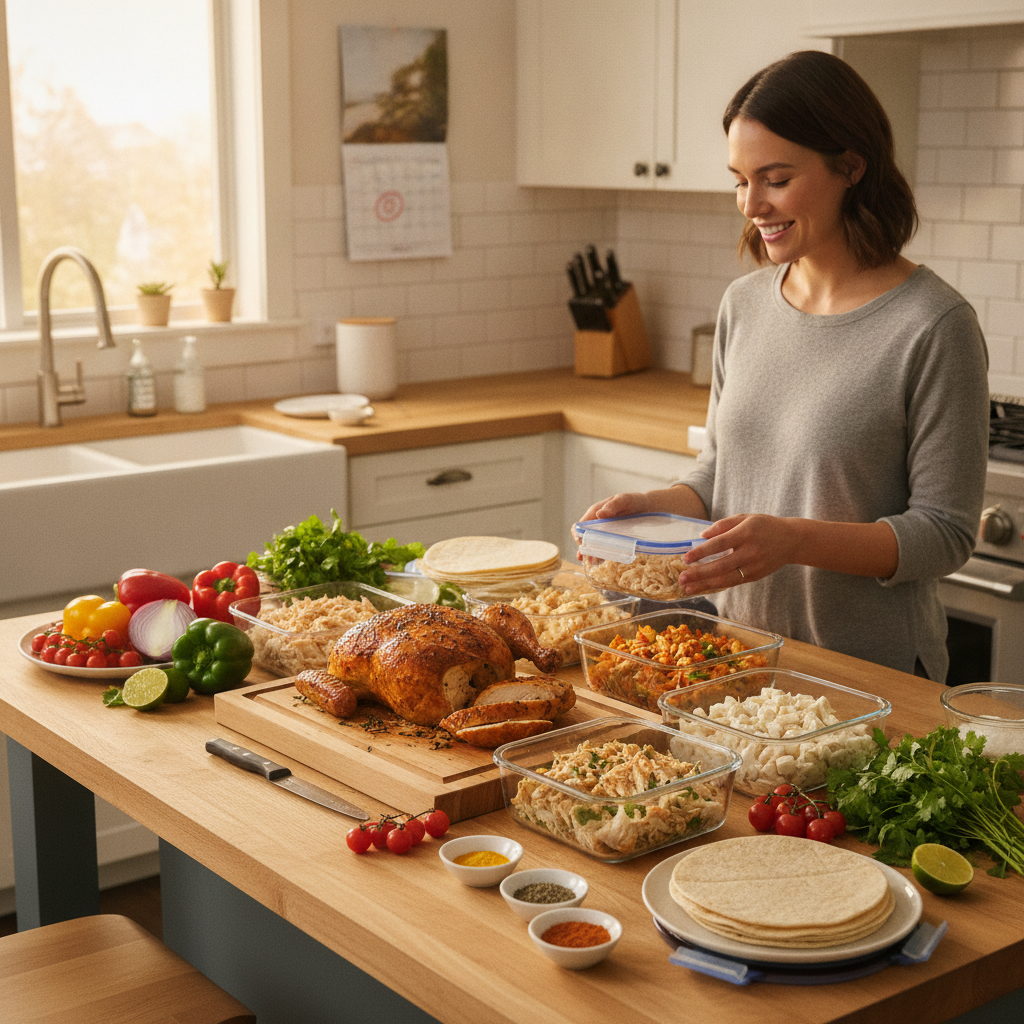
Weeknight dinner stress rarely comes from a lack of food in the house — it comes from the moment you open the fridge and have to decide, from scratch, what to make with whatever's in there. That daily decision, repeated five times a week, drains more mental energy than most people realize. Batch-cooking a single versatile protein on Sunday afternoon sidesteps that problem entirely. Instead of starting from zero each evening, you start with something already done.
Why Does the Protein Choice Matter So Much?
Protein is typically the most time-consuming and expensive component of any weeknight meal. It's also the piece that anchors everything else on the plate. When that element is already cooked and waiting, the rest of the meal — grains, vegetables, sauces, toppings — comes together in minutes rather than the better part of an hour. Choosing a protein that works across multiple flavor profiles is what makes the whole system hold up through Thursday without feeling repetitive.
What Makes Chicken Thighs Such a Reliable Starting Point?
Boneless, skinless chicken thighs are widely considered one of the most forgiving batch proteins available. They stay moist after refrigeration in a way that chicken breast rarely does, and they absorb flavors well whether you're pulling them into tacos, slicing them over rice bowls, or folding them into a quick pasta. A standard sheet pan of thighs roasted with olive oil, garlic, and salt takes about 35 minutes in the oven — almost no active time required. Brands like Butcher Box make it easy to keep a consistent supply in the freezer, so Sunday prep stays predictable.
How Does a Simple Seasoning Strategy Prevent Flavor Fatigue?
The temptation is to season the protein heavily on Sunday with a specific dish in mind, but that locks you into repetition. A light, neutral preparation — salt, pepper, a little olive oil, maybe a squeeze of lemon — leaves the protein open for whatever direction Monday through Thursday calls for. You can pull it toward Mediterranean flavors with a tahini drizzle, go toward something bolder with a chipotle sauce from Trader Joe's, or keep it simple alongside roasted vegetables. The protein becomes a blank canvas rather than a predetermined answer.
What Other Proteins Work Just as Well as Chicken?
Chicken is a natural starting point, but the approach works across a wide range of proteins depending on dietary preferences. Hard-boiled eggs batch well and add versatility for grain bowls and salads. A large piece of salmon poached gently on Sunday holds up well for two to three days and pairs naturally with Asian-inspired sauces, greens, or avocado. Ground turkey or beef, cooked plain with minimal seasoning, can shift direction quickly — one night it becomes a taco filling, the next it becomes a base for a simple tomato sauce. The key is keeping the preparation neutral.
How Much Should You Actually Prepare in One Session?
Over-preparing is a real risk. Cooking more than four or five days' worth of protein means quality starts to drop before you can use it all, and the monotony of the same ingredient every night begins to feel less like a system and more like a constraint. A practical target is enough for four weeknight dinners, leaving one night open for something fresh, a takeout choice, or leftovers from earlier in the week. For a household of two, roughly one and a half pounds of cooked protein hits that range comfortably without creating waste.
Where Does the Rest of the Week's Planning Come In?
Once the protein is handled, the remaining decisions become much lighter. Keeping a small rotation of grains — rice, farro, or quinoa — that can also be batch-cooked means the base of any meal is ready in seconds. Apps like Paprika or Mealime can help you map out loose weeknight combinations without committing to rigid meal plans. The goal isn't a strict schedule, it's a set of components that make improvisation feel easy rather than stressful. Having the protein done is what makes that improvisation possible.
How Does This Habit Change the Feel of Weeknight Evenings?
The shift is less about saving dramatic amounts of time and more about removing a particular kind of friction that accumulates across the week. Decision fatigue around food is real — by Wednesday or Thursday, the mental load of figuring out dinner from scratch is noticeably heavier than it was on Monday. A prepped protein eliminates the hardest question of the evening before the week even begins. What's left is assembly, not cooking, and that difference in mental load is what makes weeknight evenings feel calmer and more manageable overall.
How Do You Build the Habit Without Overcomplicating It?
The simplest version of this habit takes about 40 minutes on a Sunday afternoon and requires nothing more than an oven, a sheet pan, and a protein you already like. Starting with one protein, one seasoning approach, and a loose plan for how you'll use it across the week is enough. Resist the urge to build a complex system right away. Over a few weeks, the routine becomes automatic, and the approach can expand naturally — a second protein type, a batch of grains alongside it, or a quick sauce stored in the fridge. The habit builds on itself once the foundation is in place.
Starting small is genuinely the right move here. Pick one protein this Sunday, cook it simply, and see how differently the first three weeknight dinners feel when that decision is already made. Small systems like this one tend to stick because they solve a real, recurring problem without demanding much in return.